
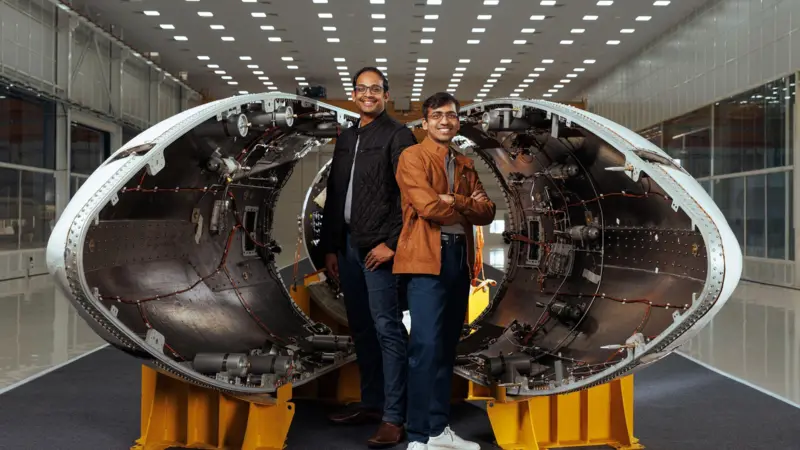

Key Highlights
India's commercial space sector crossed a historic milestone as Hyderabad-based aerospace start-up Skyroot Aerospace unveiled its first private commercial orbital rocket, Vikram-1. Designed to carry up to 480 kg payload into Low Earth Orbit (LEO), Vikram-1 represents a giant leap in India's Space 2.0 reforms led by IN-SPACe (Indian National Space Promotion and Authorization Centre). Essential reading for candidates preparing for MPPSC (Mains Paper 3 Unit 7) and UPSC (GS-3 Science & Tech).
Related High-Authority Articles (Interlinking Links)
- ISRO GSLV-F17 EOS-05 Satellite Launch Key Highlights: SDSC SHAR launch timeline and GEO satellite specs.
- ISRO GSLV-F17 EOS-05 Mission 2026 Complete Notes: Indigenous CUS Cryogenic Engine & GEO payloads.
- World's 1st Autonomous Shipbuilding Centre in Andhra Pradesh: Nellore shipyard & AI maritime tech.
- India's 1st Dedicated Drone Battalion 'Baaz' in Punjab: Jalandhar Vajra Corps & BSF counter-drone operations.
- PARAM Pragya AI Supercomputer & India's Supercomputing Journey: C-DAC & National Supercomputing Mission.
- Ramsar Sites in India Complete List & Map Notes: Wetland conservation & environmental science.
- Disaster Management Amendment Act 2025 Study Notes: NDMA, SDMA & early warning systems.
1. Vikram-1 Rocket Specifications & Quick Fact Sheet
- Developing Firm: Skyroot Aerospace (Hyderabad, Telangana)
- Launch Vehicle Class: Multi-Stage Private Orbital Rocket
- Payload Capacity: 480 kg to 500 km Low Earth Orbit (LEO)
- Propulsion Motors: Kalam-100 (Solid Stage) and Raman-1 (Liquid Upper Stage)
- Structural Architecture: All-Carbon-Fiber Composite Airframe
- Regulatory Nodal Body: IN-SPACe (Department of Space)
2. 3D-Printed Engines & Kalam Motor Series
Vikram-1 features cutting-edge 3D-printed liquid thrusters and solid rocket stages.
- Kalam-100: High-thrust solid rocket motor built using carbon-filament winding technology for maximum mass efficiency.
- Raman-1: 3D-printed 4-engine liquid upper stage offering multi-orbit payload insertion capability.
- MAX-Q / Infinity Campus: Skyroot's 60,000 sq ft headquarters in Hyderabad represents Asia's largest private rocket manufacturing facility.
3. IN-SPACe & Indian Space Policy 2023
- IN-SPACe Role: Created in 2020 as an autonomous single-window nodal agency under the Department of Space to enable Non-Government Private Entities (NGPEs) to use ISRO infrastructure.
- Indian Space Policy 2023: Delineates roles for ISRO (R&D), NSIL (commercialization), and IN-SPACe (private sector authorization).
- Global NewSpace Market: India aims to scale its global space economy share from 2% ($8 Billion) to over 8% by 2030.
4. MPPSC & UPSC Exam POV
- MPPSC Mains Paper 3 Unit 7: Space technology in India, ISRO vs Private Sector, 3D printing in aerospace, and Skyroot Vikram series.
- UPSC GS-3 (Science & Tech): Indian Space Policy 2023, IN-SPACe mandate, commercial satellite launch market, and Make in India in space.
Practice Questions
1Which start-up developed India's first private orbital rocket 'Vikram-1'?
2What is the LEO payload capacity of Vikram-1 rocket?
3In which year was IN-SPACe established by the Government of India?
4What is the name of Vikram-1's liquid upper stage engine?
5Which composite material forms the primary structure of Vikram-1?
6Under Indian Space Policy 2023, which entity handles ISRO commercialization?
7Where is Skyroot Aerospace's rocket manufacturing facility 'Infinity Campus' located?
8What was the name of India's first private sub-orbital rocket launched in 2022?
Frequently Asked Questions
Article Sources
3 sources
Article Sources
3 sources