
Key Highlights
Mission Overview and Historical Milestone (PM Modi Statement)
Related High-Authority Articles (Interlinking Links)
- India's First Private Orbital Rocket 'Vikram-1' (Skyroot): 480 kg LEO payload & 3D printed Raman-1 engine.
- World's 1st Autonomous Shipbuilding Centre in Andhra Pradesh: Nellore shipyard & AI maritime tech.
- India's 1st Dedicated Drone Battalion 'Baaz' in Punjab: Jalandhar Vajra Corps & BSF counter-drone operations.
- PARAM Pragya AI Supercomputer & India's Supercomputing Journey: C-DAC & National Supercomputing Mission.
- Ramsar Sites in India Complete List & Map Notes: Wetland conservation & environmental science.
- Disaster Management Amendment Act 2025 Study Notes: NDMA, SDMA & early warning systems.
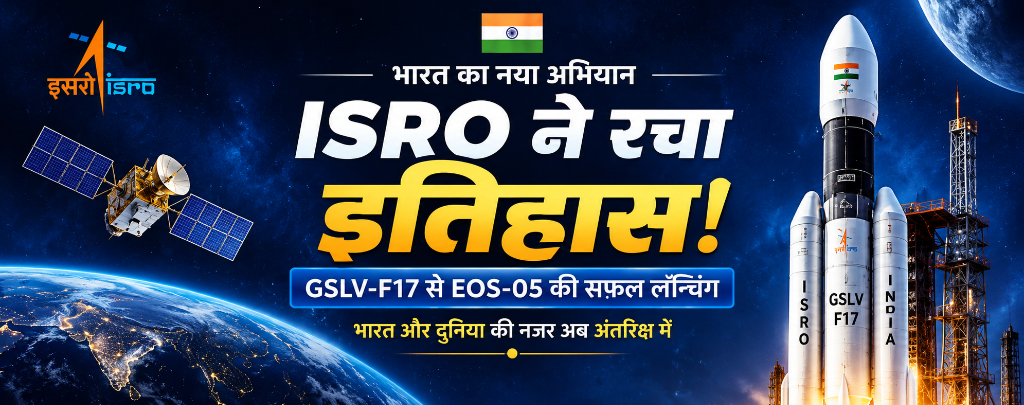
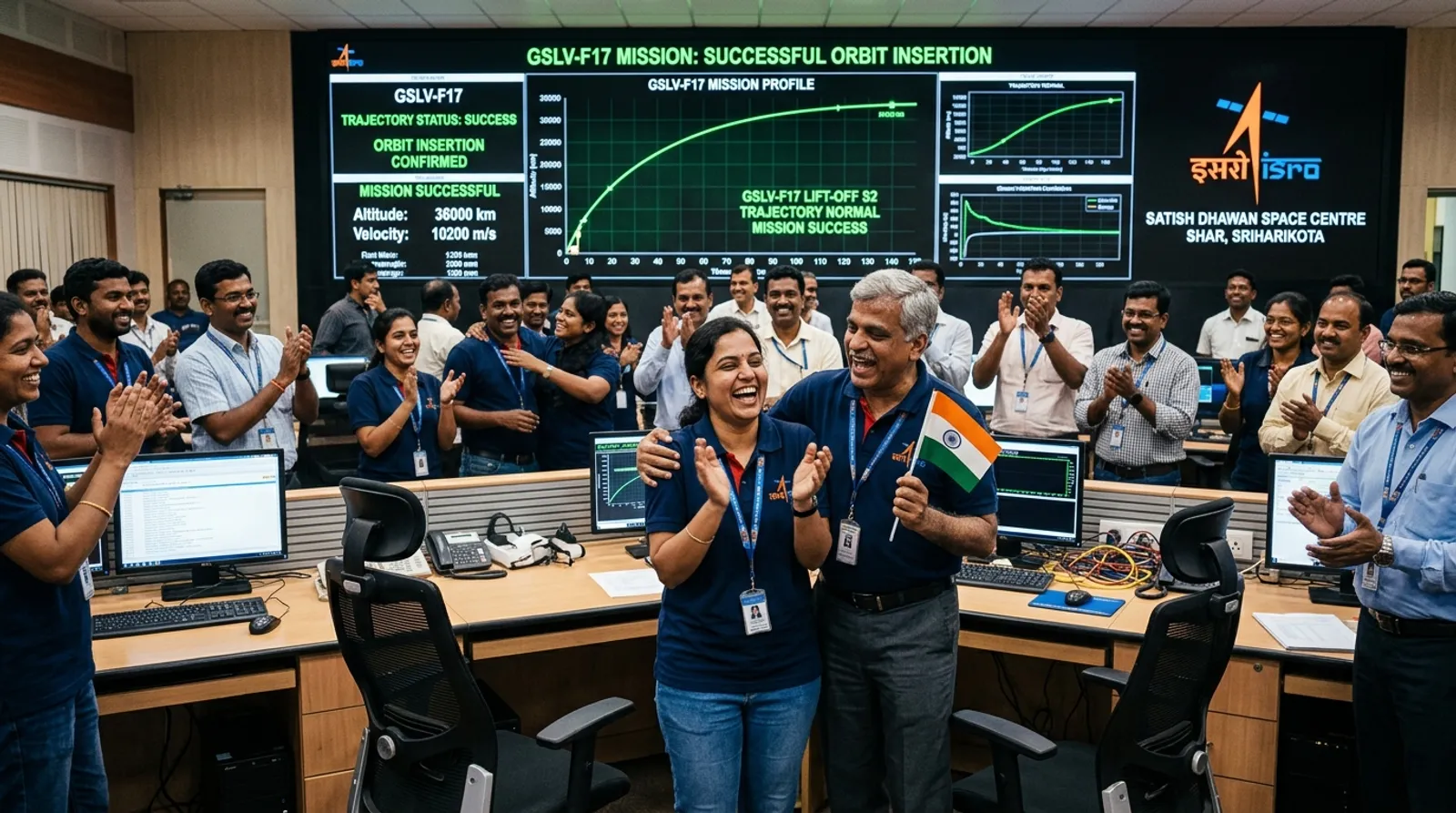
On 4 September 2026, the Indian Space Research Organisation (ISRO) achieved a monumental milestone in space exploration. ISRO's heavy-lift launch vehicle GSLV-F17 (Geosynchronous Satellite Launch Vehicle) successfully deployed the state-of-the-art Earth Observation Satellite EOS-05 into its designated orbit.
The launch took place at 02:55 AM (IST) from the Second Launch Pad of Satish Dhawan Space Centre (SDSC SHAR), Sriharikota, Andhra Pradesh. EOS-05 was earlier designated as GISAT-1A.
PM Narendra Modi's Statement: Congratulating ISRO scientists on this landmark victory, Prime Minister Narendra Modi stated: "The successful launch of GSLV-F17 carrying EOS-05 elevates India's space prowess, national security, and disaster management capabilities to unprecedented heights. This mission embodies the spirit of Atmanirbhar Bharat."
This topic is of vital importance for competitive exams, particularly MPPSC Mains (GS Paper-3: Science & Technology) and MPPSC / UPSC Prelims Current Affairs.
- Launch Vehicle: GSLV-F17 (This was the 19th flight of the GSLV rocket series).
- Satellite: EOS-05 (Earth Observation Satellite-05), famously dubbed as India's 'Eye in the Sky'.
- Satellite Mass: Approximately 2,367 kg, marking a major heavy payload for GSLV.
- Target Orbit: Sub-Geosynchronous Transfer Orbit (Sub-GTO), from where onboard thrusters maneuvered it into a 36,000 km Geostationary Orbit (GEO).
- Mission Lifespan: Expected operational life of over 7 years.
Core Features of EOS-05 Satellite ('Eye in the Sky')
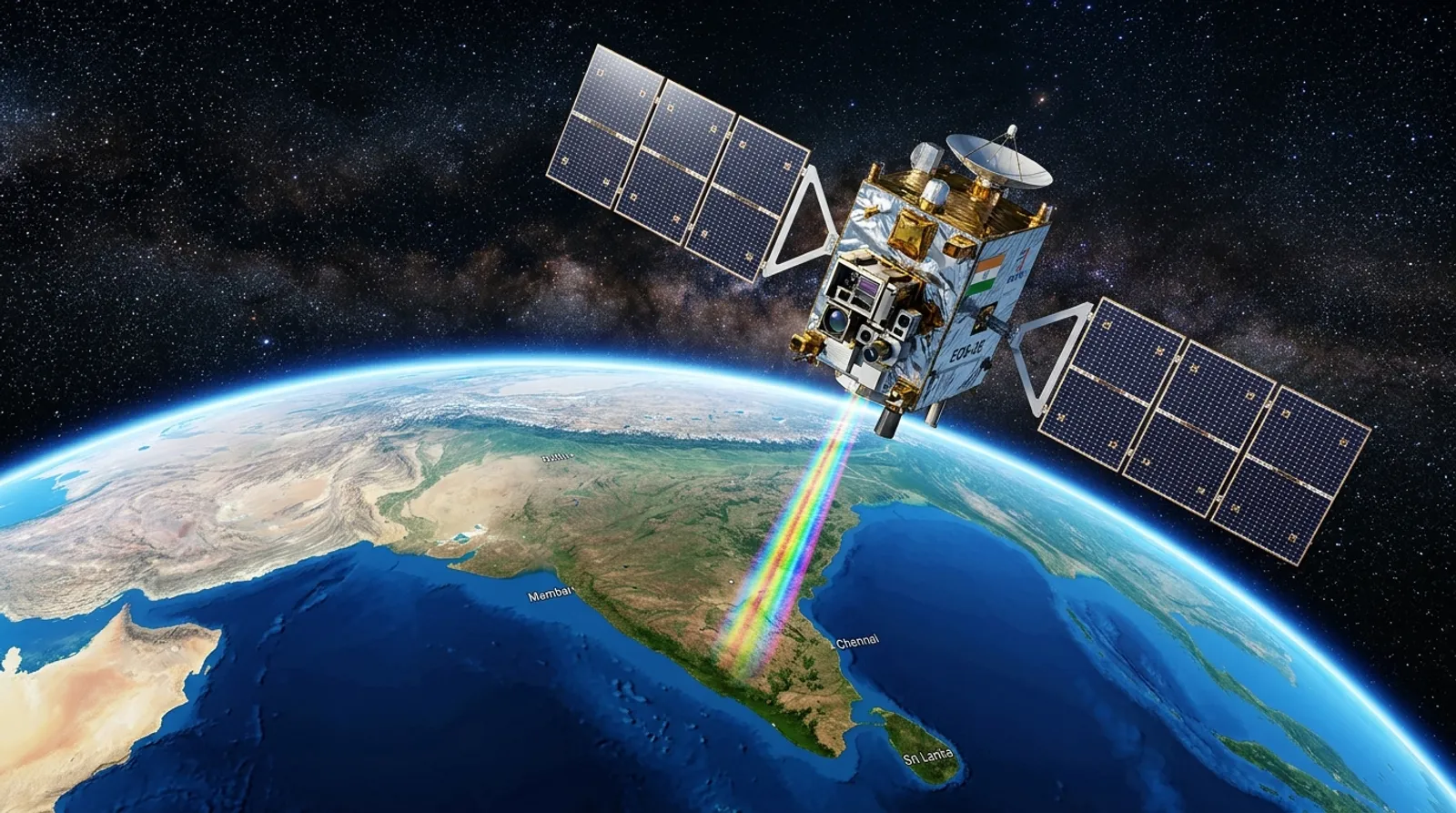
Unlike conventional Earth observation satellites that orbit in Low Earth Orbit (LEO - 160 to 2,000 km), EOS-05 is positioned in a 36,000 km Geostationary Orbit (GEO):
- Continuous Real-Time Imaging: Situated in GEO, the satellite rotates at the exact speed of Earth, enabling it to transmit high-resolution real-time images of the Indian landmass every 30 minutes.
- Border Surveillance: Maintains 24/7 vigil over India's land borders with China and Pakistan (LAC, LOC) as well as the Indian Ocean Region (IOR).
- Disaster Management: Provides rapid real-time alerts for Cyclones, Floods, Landslides, and Forest Fires, significantly minimizing loss of life.
- Agriculture & Weather: Measures crop health, soil moisture, cloud cover dynamics, and weather pattern updates.
- Payload Sensors: Equipped with Hyperspectral Imagers and multispectral cameras functioning across Visible, Near-Infrared, and Thermal Infrared spectrums.
GSLV-F17 Technical Architecture
GSLV-F17 is a three-stage heavy payload launch vehicle:
- First Stage (Solid Stage - S139): Core solid motor S139 augmented by 4 liquid L40 strap-on motors generating intense initial thrust.
- Second Stage (Liquid Stage): Powered by the liquid-fueled Vikas Engine.
- Third Stage (Cryogenic Stage - CUS15): Indigenous Cryogenic Upper Stage (CUS-15) operating at sub-zero cryogenic temperatures.
- Vehicle Dimensions: Height of 51.7 meters and lift-off mass of approximately 420.5 tonnes.
Key Differences Between PSLV and GSLV (PSLV vs GSLV)
Understanding launch vehicle differences is crucial for civil service aspirants:
- Number of Stages: PSLV is a 4-Stage rocket (Solid-Liquid-Solid-Liquid), whereas GSLV is a 3-Stage rocket (Solid-Liquid-Cryogenic).
- Cryogenic Engine: PSLV does not use cryogenic engines; GSLV relies on an indigenous Cryogenic Upper Stage (CUS) in its 3rd stage.
- Payload Capacity: PSLV carries satellites up to 1,750 kg into LEO or SSO. GSLV carries heavy payloads (2,500 to 4,000 kg) into GTO and GEO.
- Nicknames: PSLV is known as ISRO's 'Workhorse', while GSLV is referred to as ISRO's 'Bahubali Rocket'.
How Does a Cryogenic Engine (CUS-15) Function?
Cryogenic technology is among the most sophisticated domains in aerospace engineering:
- Super-Cold Storage: The engine burns Liquid Hydrogen (LH₂) stored at -253°C as fuel and Liquid Oxygen (LOX) stored at -183°C as oxidizer.
- High Specific Impulse: Provides maximum thrust per unit mass of propellant, enabling heavy satellites to reach high altitude orbits (36,000 km GEO).
MPPSC Mains GS-3 Model Answer Capsule
Question: Discuss the primary objectives and strategic significance of the GSLV-F17/EOS-05 mission. (5 Marks / 50 Words or 11 Marks / 200 Words)
Model Answer: Launched by ISRO on 4 September 2026, EOS-05 is India's first geostationary Earth observation satellite.
Key Objectives & Significance:
- 1. Border Security: Stationed at 36,000 km, transmits real-time images of LAC, LOC & IOR every 30 minutes.
- 2. Disaster Alert: Provides early warnings for cyclones, floods, and forest fires.
- 3. Tech Sovereignty: Validates indigenous CUS-15 Cryogenic Engine capabilities.
Conclusion: EOS-05 empowers India with a continuous 'Eye in the Sky', fortifying national security and disaster resilience under Atmanirbhar Bharat.
Practice Questions
1Which rocket launched ISRO's 'EOS-05' Earth Observation Satellite?
2What is the primary operational orbit of the EOS-05 satellite?
3What does 'CUS' stand for in the 3rd stage of ISRO's GSLV rocket series?
4What are the primary applications of Earth Observation Satellites (EOS)?
5Where is Satish Dhawan Space Centre (SDSC SHAR) located in India?
6What is the designation of the indigenous Cryogenic engine developed by ISRO for GSLV?
7Interlinking Check: What is India's first private orbital rocket launched for space expansion?
8Which statement is correct regarding ISRO topics under MPPSC Mains Paper 3 Unit 7?
Frequently Asked Questions
Article Sources
4 sources
Article Sources
4 sources