Key Highlights
The centuries-old ritualistic wall art tradition of the Bhil, Bhilala, and Rathwa tribal communities across Madhya Pradesh and Gujarat, known as Pithora Painting, has been officially awarded the Geographical Indication (GI) Tag in 2026. It is not merely a painting technique, but a sacred living folk tradition of faith, vows (badha/mannat), and spiritual rituals. This expanded study guide is tailored specifically for civil service aspirants preparing for MPPSC (Prelims & Mains Paper 1 - MP Tribal Art & Culture) and UPSC GS Paper 1 (Art & Culture).

1. Pithora Painting: Geographical Spread in MP & Gujarat
- Madhya Pradesh Hub: Widely practiced across Western MP tribal belts—predominantly in Jhabua, Alirajpur, and neighboring parts of Indore.
- Origin Village: Bhabhra Village in Jhabua/Alirajpur district is regarded as the core point of origin for Pithora art in MP.
- Gujarat Hub: Chhota Udepur and Panchmahal districts.
- Associated Tribes: Bhil, Bhilala, Rathwa, and Nayaka indigenous groups.
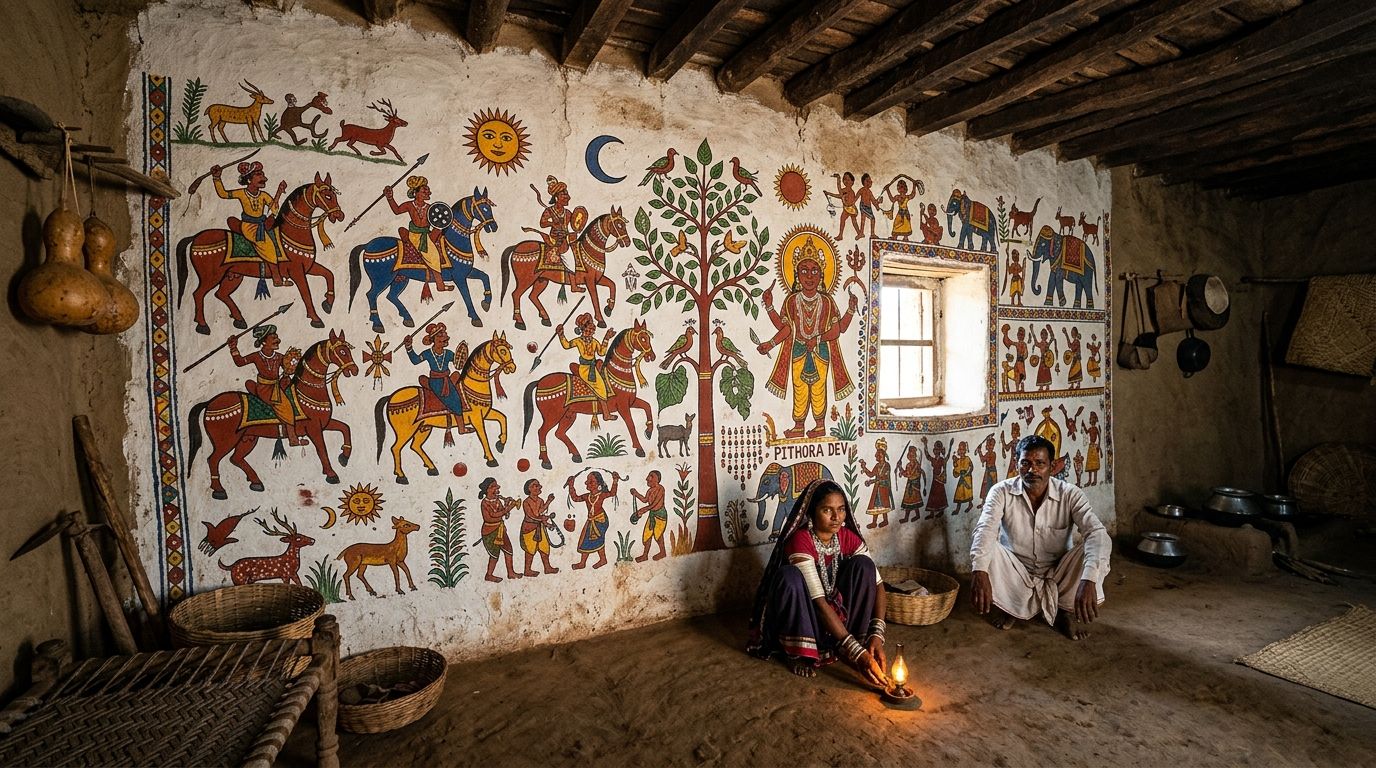
- Deity & Beliefs: Named after Pithora Baba / Pithora Dev. Drawing this mural on home walls is believed to bring peace, prosperity, health, and communal harmony.
2. Key Terminology & Ritual Roles: Likhindra, Jhokhara & Badwa
- Likhindra / Lakhara (Master Painter): The master ritual painter who draws the mural figures is called 'Likhindra' (or Lakhara).
- Jhokhara (Inventory Keeper): The person responsible for maintaining the accounts, offerings, and inventory during the ritual painting is called 'Jhokhara' (Key MPPSC Fact).
- Badwa Pujari (Supreme Priest): The high priest presiding over the ritualistic ceremony and prayers is called 'Badwa'.
- Religious Devotion: Bhil and Rathwa families invest substantial resources into installing Pithora paintings upon fulfilling vows (marriage, childbirth, bumper harvest).

3. Colors, Implements & Natural Binders (Milk & Alcohol)
- Wall Preparation: Walls and verandas are coated with an organic layer of Cow Dung and Mud (Gobhar & Mitti).
- Natural Pigments: Organic pigments include Geru (Red Ochre), Khadiya (White Chalk), Turmeric (Haldi Yellow), Hingul (Vermilion), and Stove Soot (Black).
- Natural Binder (Milk & Alcohol): Pigments are traditionally dissolved in a binding mixture of Milk and Alcohol/Madira to ensure color adhesion and vibrancy.
- Traditional Brushes: Handmade brushes were prepared by crushing the tips of cane sticks or wooden twigs.

4. Motifs & Symbolism of 7 Horses (Seven Hills)
- 7 Horses = 7 Hills: The central motif depicts 7 sacred horses of Pithora Baba, representing the 7 sacred hills of the region.
- Horse Symbolism: Represents divine strength, speed, prosperity, and heavenly protection.
- Other Motifs: Tribal deities (Ganesha, Pithori Devi, Sun, Moon), wildlife (elephants, peacocks), and village scenes (farming, hunting, drumming).

5. Prominent MP Pithora Artists: Padma Shri Bhuri Bai & Gangu Bai
- Padma Shri Bhuri Bai:
- Origin: Born in Pitol Village, Jhabua District, Madhya Pradesh in a Bhil family.
- Historic Milestone: First Bhil female artist to transition traditional Pithora wall art onto paper and canvas.
- Discovery: Discovered by legendary artist J. Swaminathan while working as a construction laborer at Bharat Bhavan Bhopal.
- Signature Style: Distinguished by multi-coloured dots.
- Modern Motifs: Blended traditional nature and gods with modern elements like airplanes, buses, cars, and televisions.
6. MPPSC Mains Model Answer (5-Marker)
- Question (MPPSC Mains 5 Marks / 50 Words): 'Write a short note on Pithora Art of Madhya Pradesh.'
- Model Answer:
- 1Intro: Sacred ritualistic wall art of Bhil & Bhilala tribes across Western MP (Jhabua, Alirajpur).
- 2Deity & Symbolism: Dedicated to Baba Pithora; central 7 horses represent the 7 sacred hills of the region.
- 3Roles: Rendered by Likhindra (artist) under Badwa (priest), while Jhokhara manages ritual accounts.
- 4Technique: Natural pigments mixed in milk & alcohol binder applied on cow dung plastered walls.
- 5Renowned Artist: Padma Shri Bhuri Bai (2021) & granted GI Tag in 2026.

7. Significance of GI Tag (2026)
- Authenticity & Legal Rights: Provides GI protection for Bhil & Rathwa tribal art origin in 2026.
- Prevents Misuse: Stops unauthorized commercial machine prints.
- Sustainable Income: Improves livelihoods for Likhindra artisans across Jhabua, Alirajpur, and Chhota Udepur.
8. Key Summary Takeaways for MPPSC & UPSC Exams
- Art Form: Bhil & Rathwa Ritualistic Tribal Wall Art.
- MP Centers: Jhabua (Pitol village), Alirajpur (Bhabhra village), Indore.
- Master Painter: Likhindra / Lakhara.
- Account Keeper: Jhokhara.
- High Priest: Badwa Pujari.
- 7 Horses Symbol: 7 Hills of the region.
- Natural Binder: Milk & Alcohol (Madira).
- Padma Shri Bhuri Bai (2021): Pitol village (Jhabua), dot style, first female Bhil canvas painter, Bharat Bhavan Bhopal.
🔗 Related GI Tags, Tribal Art & Study Notes (SEO Interlinking)
Enhance your MPPSC & UPSC Civil Services preparation with these high-authority related articles:
Dr. Rajnikant: 'GI Man of India' & Padma Shri Awardee for GI Registry Innovations
Jabalpur Peas and Water Chestnut Secure GI Tags 2026
MP Tribal Crops GI Tag 2026: Gond Rice, Badi Bajra & Agricultural Heritage
Madhya Pradesh: Burhanpur Banana Receives Prestigious GI Tag
National Handloom Day 2026: Swadeshi Movement & Textile Schemes
One District One Product (ODOP Scheme 2026): Tribal Handicrafts Promotion
Practice Questions
1Pithora Painting is primarily related to which tribe of Madhya Pradesh?
2What is the master artist who paints Pithora wall murals locally called?
3Padma Shri Bhuri Bai (2021) belongs to Pitol village of which district in MP?
4Which village is considered the main origin point of Pithora art in Madhya Pradesh?
5The 7 Horses painted in Pithora murals represent which of the following?
6Which traditional liquid binder is used to mix colors in Pithora painting?
7Which artist and director identified Bhuri Bai's talent at Bharat Bhavan Bhopal?
8In which year has Pithora Painting been granted the Geographical Indication (GI Tag)?
Frequently Asked Questions
Article Sources
3 sources
Article Sources
3 sources