
Key Highlights
1. Ramsar Sites in India 2026: Recent Developments & Overview
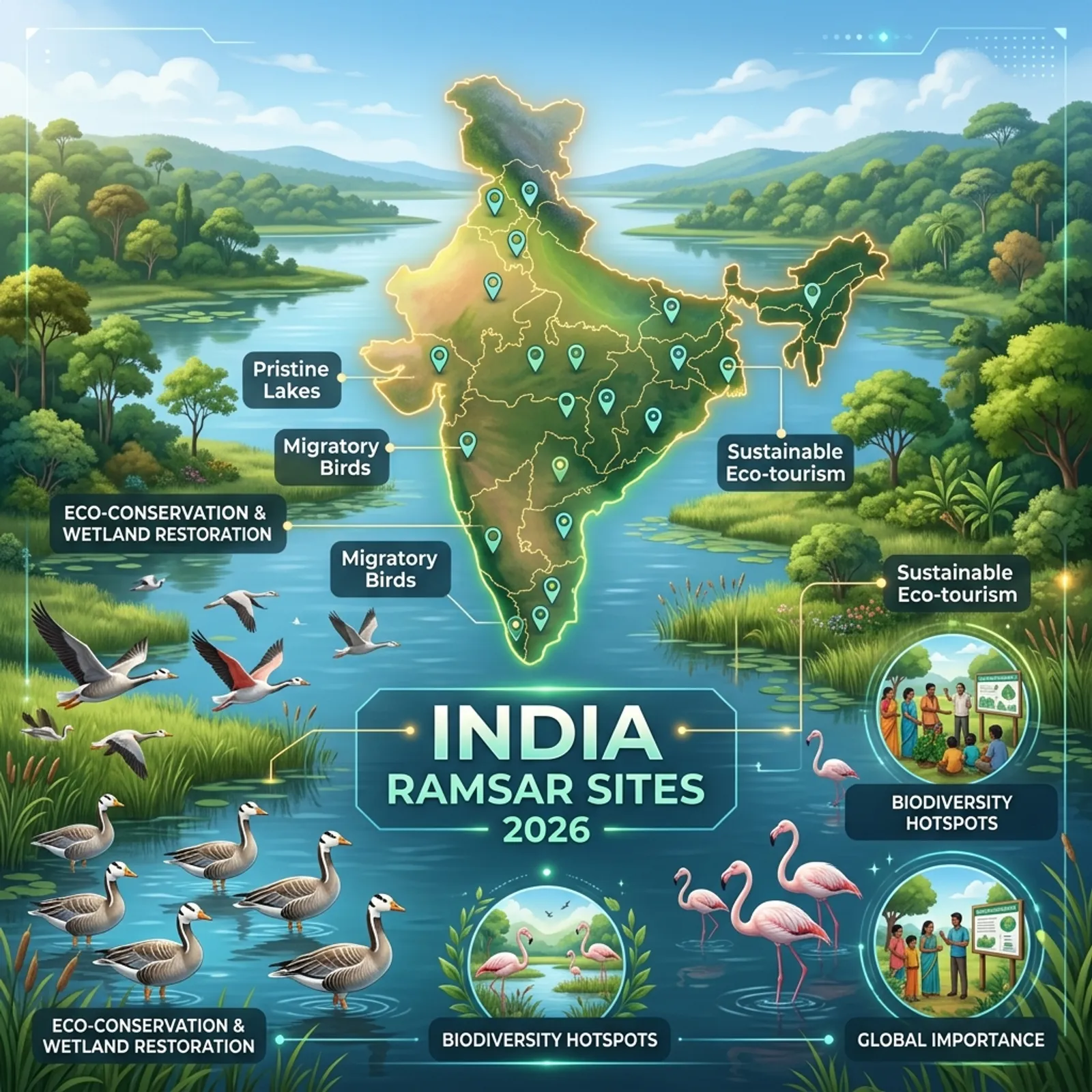
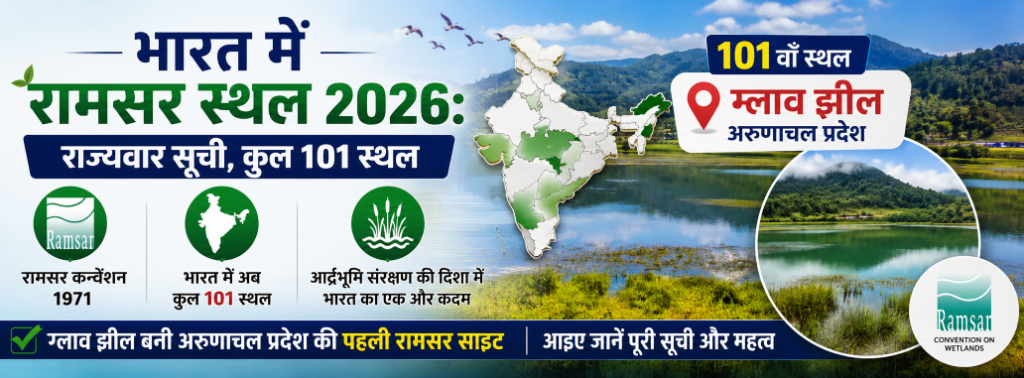
In a historic milestone for wetland conservation in India, the total number of Ramsar Sites in the country has reached 101. According to the official announcement by the Ministry of Environment, Forest and Climate Change, on August 3, 2026, the famous Glaw Lake located in the Lohit district of Arunachal Pradesh was designated as the 101st Ramsar Site of India. This is also Arunachal Pradesh's very first Ramsar Site.
Currently, India's 101 Ramsar Sites are spread across 28 states and Union Territories. The largest Ramsar Site in India is the Sundarban Wetland (4,230 sq km) in West Bengal, while the smallest sites include Renuka Lake (0.2 sq km) in Himachal Pradesh and Vembannur Wetland Complex (0.2 sq km) in Tamil Nadu. India's oldest Ramsar Sites, designated in 1981, are Chilika Lake (Odisha) and Keoladeo Ghana National Park (Rajasthan).
Total 5 Ramsar Sites in Madhya Pradesh (Ramsar Sites in MP)
Currently, there are a total of 5 Ramsar Sites in Madhya Pradesh, representing the state's rich ecological balance and wetland conservation:
- Bhoj Wetland: Located in Bhopal district, declared as MP's first Ramsar site in 2002.
- Sankhya Sagar: Located near Madhav National Park in Shivpuri district, added to the Ramsar list in 2022.
- Sirpur Lake (Sirpur Wetland): Located in Indore district, received Ramsar designation in 2022.
- Yashwant Sagar: Major wetland in Indore district, recognized under Ramsar in 2022.
- Tawa Reservoir: Located near Satpura Tiger Reserve in Narmadapuram (Hoshangabad) district, latest Ramsar site of MP declared in August 2024.
World Wetlands Day 2026 Theme & Global Importance
- World Wetlands Day: Celebrated globally every year on February 2 to commemorate the adoption of the Ramsar Convention in 1971.
- World Wetlands Day 2026 Theme: "Wetlands and Human Wellbeing". Highlights the critical link between wetland health and human prosperity, food security, and climate adaptation.
2. What is a Ramsar Site? Criteria under Ramsar Convention 1971
A Ramsar Site is an internationally recognized wetland designated under the Ramsar Convention on Wetlands, signed on February 2, 1971, in Ramsar, Iran. India became a contracting party to the convention on February 1, 1982.
To be designated as a Ramsar Site, a wetland must fulfill at least one of the following 9 international criteria:
- Criterion 1 (Representative/Unique): Contains a representative, rare, or unique example of a natural or near-natural wetland type.
- Criterion 2 (Threatened Species): Supports vulnerable, endangered, or critically endangered species or threatened ecological communities.
- Criterion 3 (Biodiversity Maintenance): Supports populations of plant and/or animal species important for maintaining regional biological diversity.
- Criterion 4 (Critical Life Stages): Supports plant and/or animal species at a critical stage in their life cycles, or provides refuge during adverse conditions.
- Criterion 5 (20,000+ Waterbirds): Regularly supports 20,000 or more waterbirds.
- Criterion 6 (1% Waterbird Population): Regularly supports 1% of the individuals in a population of one species or subspecies of waterbird.
- Criterion 7 (Fish Diversity): Supports a significant proportion of indigenous fish subspecies, species, or families, life-history stages, and interactions.
- Criterion 8 (Fish Spawning/Nursery): Is an important source of food for fishes, spawning ground, nursery, and/or migration path.
- Criterion 9 (1% Non-Avian Population): Regularly supports 1% of the individuals in a population of one species or subspecies of wetland-dependent non-avian animal species.
3. India's 101st Ramsar Site: Glaw Lake (Arunachal Pradesh)
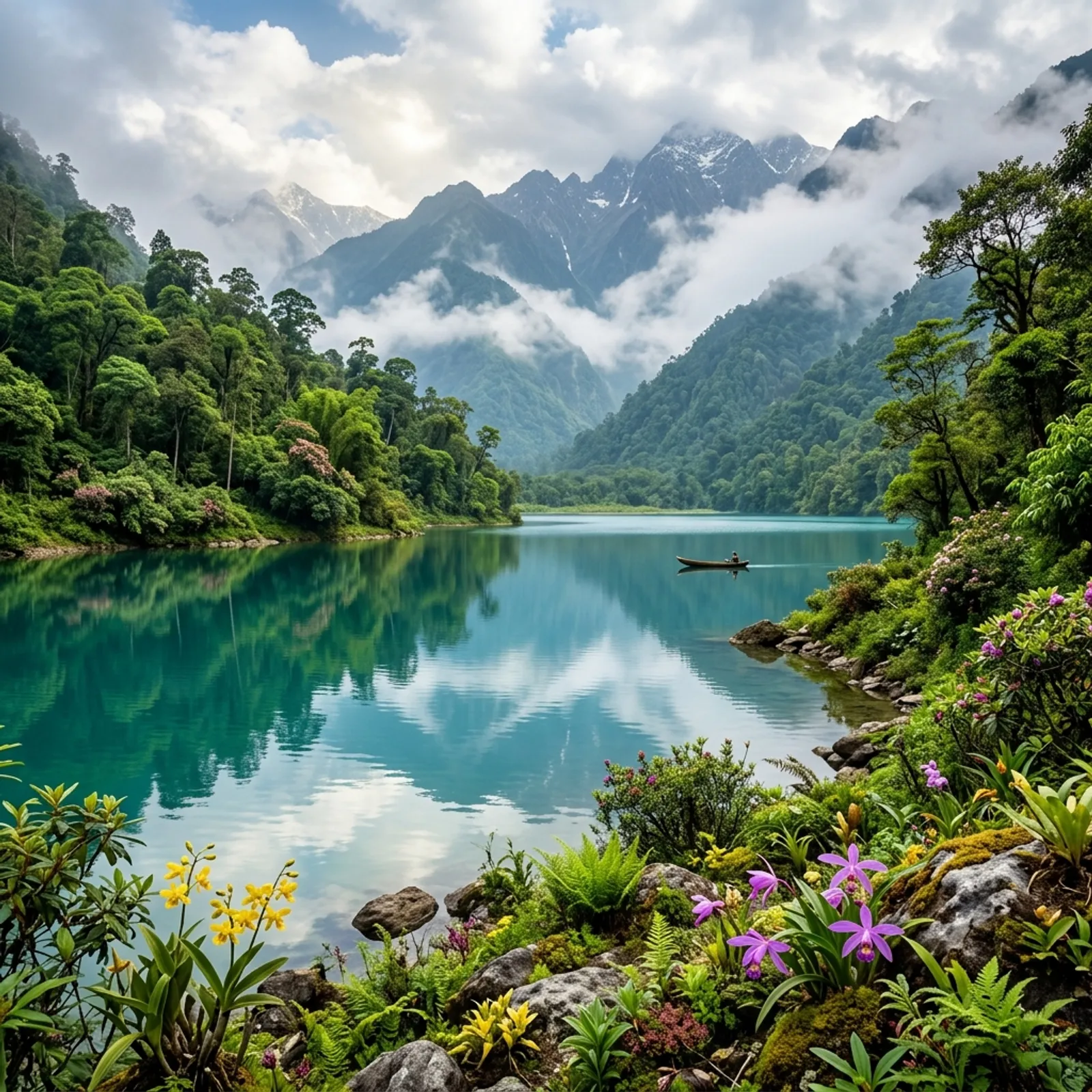
Notified by the Ministry of Environment on August 3, 2026, Glaw Lake is a pristine high-altitude freshwater lake situated inside the Kamlang Wildlife Sanctuary in Wakro circle of Lohit district, Arunachal Pradesh.
- Location & Altitude: Situated at an elevation of ~1,200 meters above sea level, surrounded by dense subtropical evergreen rainforests and the Mishmi Hills.
- Ecological Value: Acts as the primary catchment water source for the Kamlang River (a major tributary of the Lohit River). Habitat for vulnerable species like Mishmi Takin, Musk Deer, Hornbills, and rare orchids.
- Cultural Significance: Revered as a sacred lake by the indigenous Mishmi tribe.
4. Recently Added Ramsar Sites in 2025 and 2026 (16 New Sites)
During 2025 and 2026, India added 16 new Ramsar Sites, bringing the total count to 101:
| S.No | Ramsar Site | State / UT | Year | Ecological Importance |
|---|---|---|---|---|
| 1 | Sakkarakottai Bird Sanctuary | Tamil Nadu | 2025 | Important irrigation tank ecosystem for migratory waterbirds. |
| 2 | Therthangal Bird Sanctuary | Tamil Nadu | 2025 | Community-protected irrigation tank and heronry. |
| 3 | Khecheopalri Wetland | Sikkim | 2025 | Sacred high-altitude lake in Demazong Valley revered by Hindus & Buddhists. |
| 4 |
5. Complete State-wise List of Ramsar Sites in India 2026 (101 Sites)
| S.No | Ramsar Site | State/UT | Designated Year | Area (km²) |
|---|---|---|---|---|
| 1 | Chilika Lake | Odisha | 1981 | 1,165 |
| 2 | Keoladeo National Park | Rajasthan | 1981 | 28.73 |
| 3 | Loktak Lake | Manipur | 1990 | 266 |
| 4 | Harike Wetland | Punjab | 1990 | 41 |
| S.No | Ramsar Site Name | District | Year | Area | Key Ecological Features |
|---|---|---|---|---|---|
| 1 | Bhoj Wetland | Bhopal | 2002 | 32 sq km | Upper Lake (Bada Talab) & Lower Lake; Sarus Crane habitat. |
| 2 | Sakhya Sagar | Shivpuri (Madhav National Park) | 2022 | 2.48 sq km | On Maniyar River; habitat for Mugger Crocodiles & Otters. |
| 3 | Sirpur Wetland | Indore | 2022 | 1.61 sq km | 130-year-old Holkar-built lake; home to 130+ bird species. |
- 1. Bhoj Wetland (Bhopal - 2002): MP's 1st Ramsar site. Consists of Upper Lake (Bada Talab, built by King Bhoj in 11th century) and Lower Lake. Habitat for Sarus Crane and migratory birds.
- 2. Sakhya Sagar (Shivpuri - 2022): Reservoir on Maniyar River adjacent to Madhav National Park. Home to Mugger Crocodiles and Smooth-Coated Otters.
- 3. Sirpur Wetland (Indore - 2022): 130-year-old man-made wetland created by Holkar rulers of Indore. Supports 130+ migratory waterbird species.
- 4. Yashwant Sagar (Indore - 2022): Reservoir on Gambhir River. Largest Sarus Crane breeding area in Central India and designated Important Bird Area (IBA).
- 5. Tawa Reservoir (Narmadapuram - 2024): Located inside Satpura Tiger Reserve at Tawa-Denwa confluence. Largest Ramsar site in MP (200 sq km).
7. Major Comparative Facts of Indian Ramsar Sites
- State with Highest Sites: Tamil Nadu ranks 1st with 18 sites, followed by Uttar Pradesh with 13 sites.
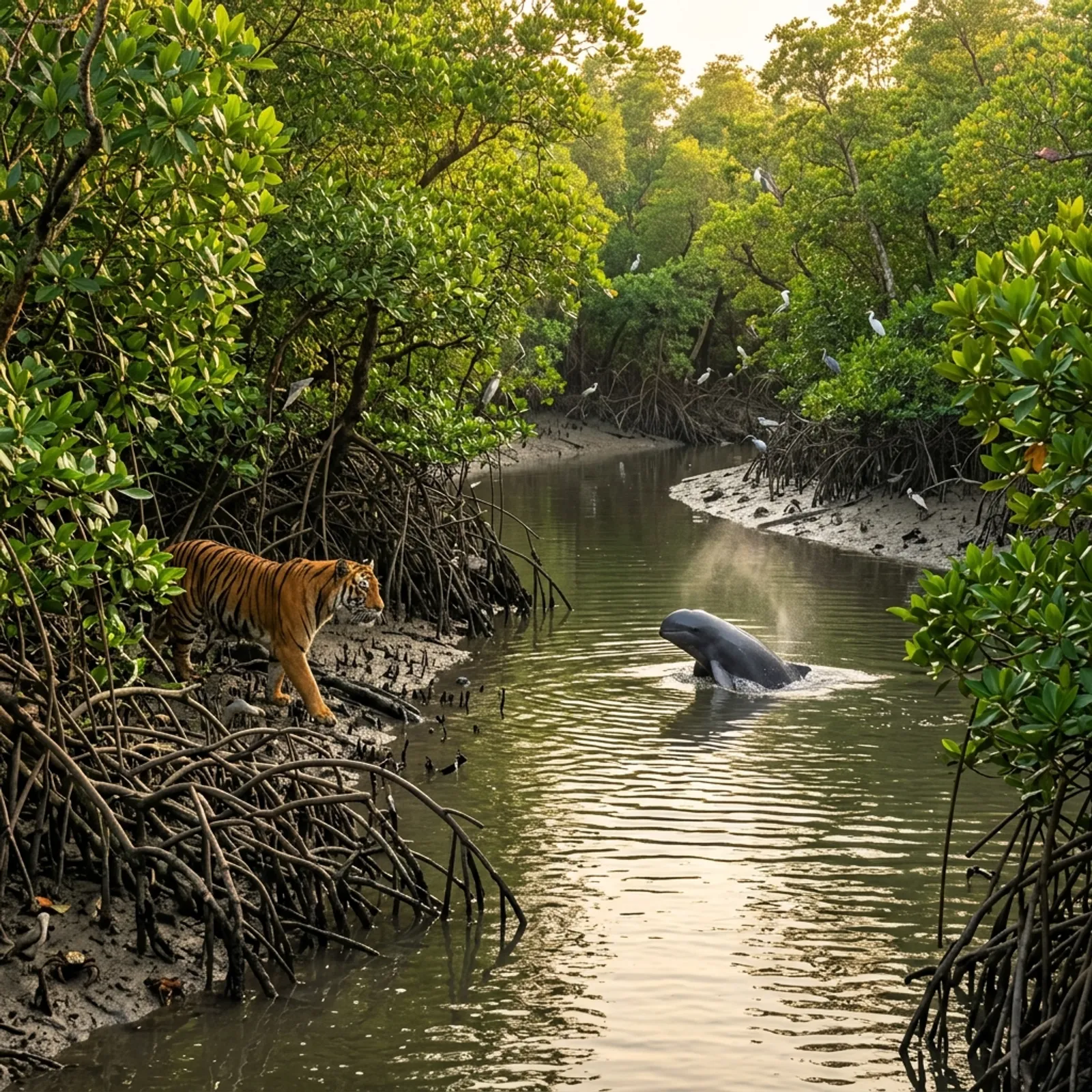
- Largest Ramsar Site: Sundarban Wetland (West Bengal) - 4,230 sq km, followed by Kazhuveli Bird Sanctuary (1,513 sq km) and Vembanad-Kol (1,512.5 sq km).
- Smallest Ramsar Sites: Renuka Lake (Himachal Pradesh - 0.2 sq km) and Vembannur Wetland Complex (Tamil Nadu - 0.2 sq km).
- First Ramsar Sites: Designated in 1981, Chilika Lake (Odisha) and Keoladeo Ghana National Park (Rajasthan) were India's first Ramsar sites.
8. Montreux Record in India
The Montreux Record is a register of Ramsar sites where changes in ecological character have occurred, are occurring, or are likely to occur as a result of technological developments, pollution or other human interference.
Currently, 2 Ramsar Sites in India are listed under the Montreux Record:
- Keoladeo Ghana National Park (Rajasthan): Listed in 1990 due to water shortage and unchecked grazing by cattle.
- Loktak Lake (Manipur): Listed in 1993 due to deforestation in catchment area, siltation, and ecological disruption from Ithai Barrage.
- Special Note (Chilika Lake Removal): Chilika Lake was placed in the Montreux Record in 1993 but was removed in 2002 after successful restoration by the Chilika Development Authority (CDA). It was awarded the Ramsar Wetland Conservation Award.
🔗 Related Environment & MP Study Notes (SEO Interlinking)
Explore key related study notes for MPPSC & UPSC Civil Services Preparation: 👉 UNFF Global Forest Goals Report 2026: Forest Loss, India SDG 94th Rank & Green India Mission 👉 MP Tribal Crops GI Tag 2026: Agricultural Heritage & MPPSC Notes 👉 Disaster Management Amendment Act 2025: UDMA Section 41A & Governance 👉 Bio-fertilizers and Sustainable Soil Ecology NCERT GK Notes
9. Syllabus Interlinking & Strategic Importance for MPPSC & UPSC
- MPPSC Prelims (Unit-7 Science & Environment): Key facts on 101 total sites, 101st site Glaw Lake, MP's 5 sites (Bhoj, Sakhya Sagar, Sirpur, Yashwant Sagar, Tawa), and Montreux record.
- MPPSC Mains (GS Paper-3 Environment): Analytical questions on wetland ecological services, groundwater recharge, Ramsar 1971 criteria, and Wetland Conservation Rules 2017.
- UPSC Prelims & Mains (GS-3): Map-based matching of wetlands, migratory flyways (Central Asian Flyway), and Montreux record criteria.
Practice Questions
1In which State/UT is 'Glaw Lake', declared as India's 101st Ramsar Site on August 3, 2026, located?
2What is the total number of Ramsar Sites in India as of August 2026?
3Which state holds the highest number of Ramsar Sites in India?
4Which is the largest Ramsar Site in India by surface area?
5Which two Indian Ramsar sites are currently listed under the 'Montreux Record'?
6Which of the following sites in Madhya Pradesh is NOT listed as a Ramsar Site?
7Which were the first Ramsar Sites designated in India in the year 1981?
8In which year was the Ramsar Convention adopted, and when did India become a contracting party?
Frequently Asked Questions
Article Sources
3 sources
Article Sources
3 sources