Simon Commission (1927-1928): Arrival Date in India, Objectives, 7 Members, Boycott, Legacy | MPPSC & UPSC Notes PDF
Complete comprehensive guide on Simon Commission (Indian Statutory Commission, 1927-28): Arrival date (Feb 3, 1928), 7 British members list, reasons for boycott, supporters list (Justice Party, Unionists), martyrdom of Lala Lajpat Rai, Nehru Report 1928, recommendations and 1935 Act. Target for MPPSC & UPSC.

Google Featured Snippet: Simon Commission Quick Summary
- What is Simon Commission: The Simon Commission (officially the Indian Statutory Commission) was a panel of seven British Members of Parliament set up in 1927 to study constitutional reform in India.
- Formation Date: November 8, 1927 in London.
- Arrival Date in India: February 3, 1928 at Bombay port.
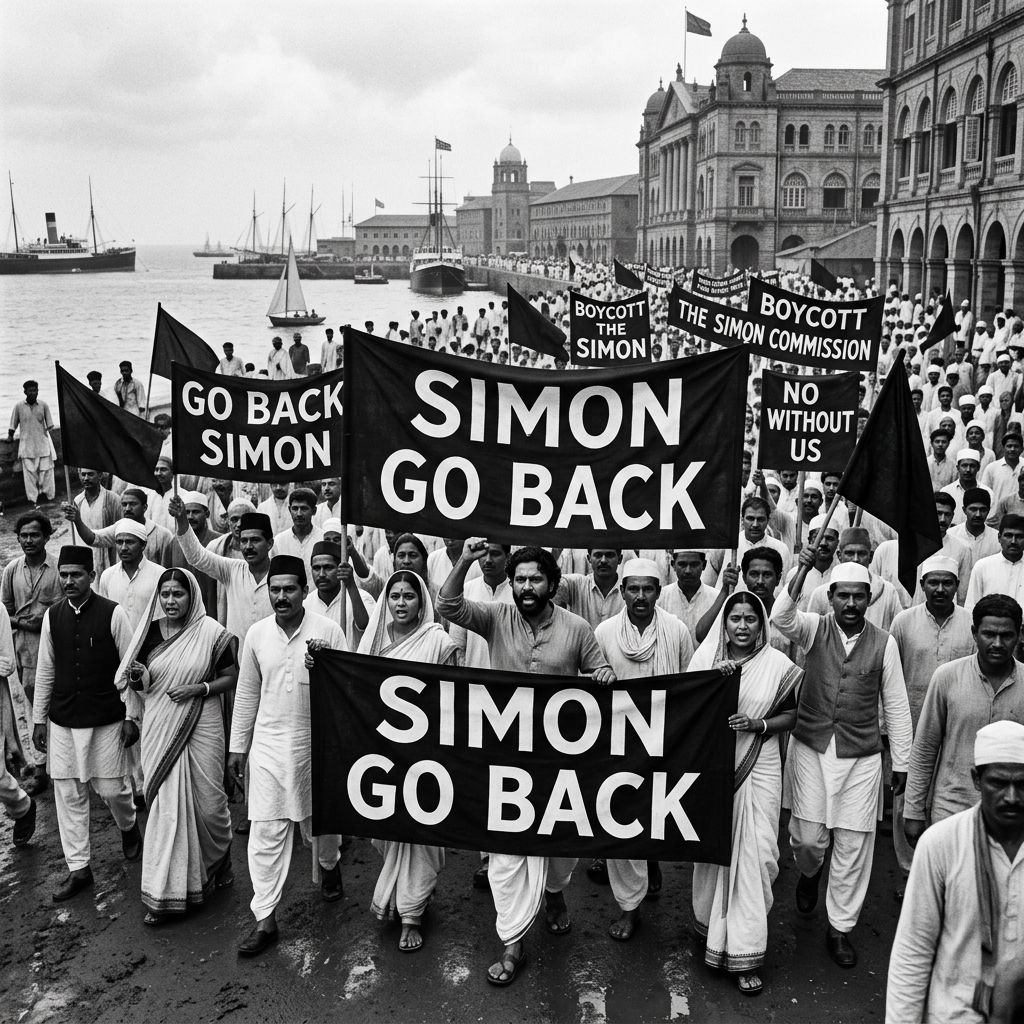
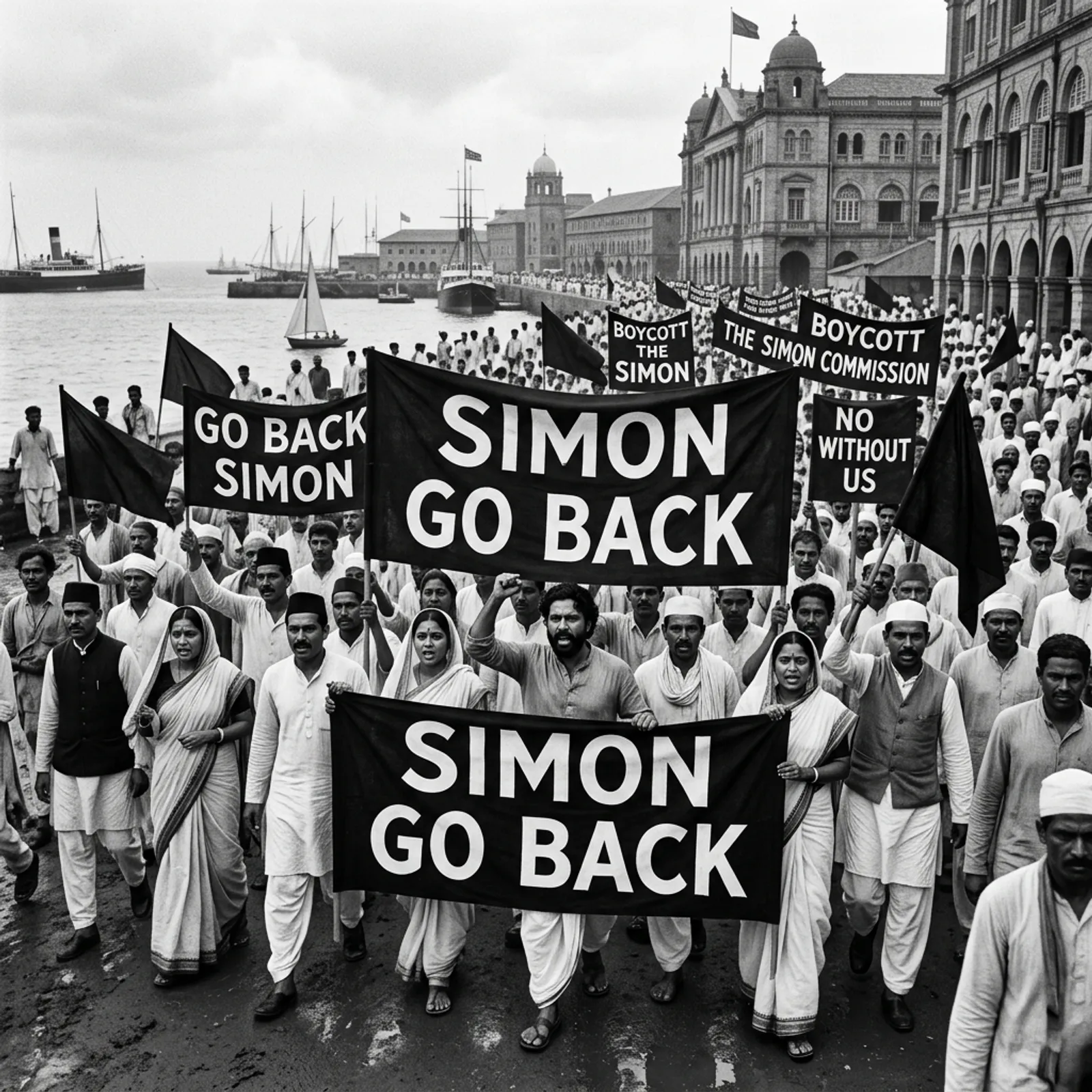
- Why Boycotted: It was an 'All-White Commission' with zero Indian representation.
- Key Outcome: Triggered the drafting of the Nehru Report (1928) and shaped the Government of India Act 1935.
What is Simon Commission, Formation & Arrival Date in India?
1. Formation Background & Date of Arrival in India
- Official Name: Indian Statutory Commission.
- Formation Date: November 8, 1927 in London by the British Conservative Government.
- Arrival Date in India: February 3, 1928 at Bombay port.
- All-White Commission: Consisted of 7 British MPs led by Sir John Simon, excluding Indian members completely.

List of All 7 Members of the Simon Commission
2. Complete List of the 7 British Commission Members
- 1. Sir John Simon: Chairman (Liberal Party)
- 2. Clement Attlee: Member (Labour Party - Future British PM during Indian Independence in 1947)
- 3. Harry Levy-Lawson, Viscount Burnham: Member (Conservative)
- 4. Edward Cadogan: Member (Conservative)
- 5. Vernon Hartshorn: Member (Labour)
- 6. George Lane-Fox: Member (Conservative)
- 7. Lord Strathcona: Member (Conservative)
Why Did Simon Commission Come to India? (Objectives & Mandate)
3. Primary Mandate & Terms of Reference
- Diarchy Assessment: To evaluate the provincial diarchy framework set up under the 1919 Act.
- Constitutional Proposals: To recommend further legislative reforms while keeping imperial sovereignty intact.
- Communal Electorates & Order: To inspect separate communal electorates and law and order dynamics.
Criticism & Boycott of Simon Commission (1927 Madras Session)
4. Reasons for Boycott & INC Madras Session 1927
- INC Resolution: Passed at the 1927 Madras Session presided by Dr. M.A. Ansari to boycott the commission 'at every stage and in every form'.
- Broad Coalition: Supported by INC, Hindu Mahasabha, Liberals, and Jinnah's faction of Muslim League.
Who Supported the Simon Commission? (Supporters List)
5. Parties and Leaders Who Did Not Boycott the Commission
- 1. Justice Party (Madras): Cooperated with the commission to safeguard non-Brahmin interests.
- 2. Unionist Party (Punjab): Led by Sir Fazl-i-Hussain and Ch. Chhotu Ram, did not boycott.
- 3. All India Depressed Classes Association: Dr. B.R. Ambedkar submitted demands for depressed classes.
- 4. Muslim League (Shafi Group): The faction led by Muhammad Shafi cooperated.
Lahore Protest Rally & Martyrdom of Lala Lajpat Rai (Nov 17, 1928)
6. The Oct 30 Lahore Lathi Charge & Historic Statement
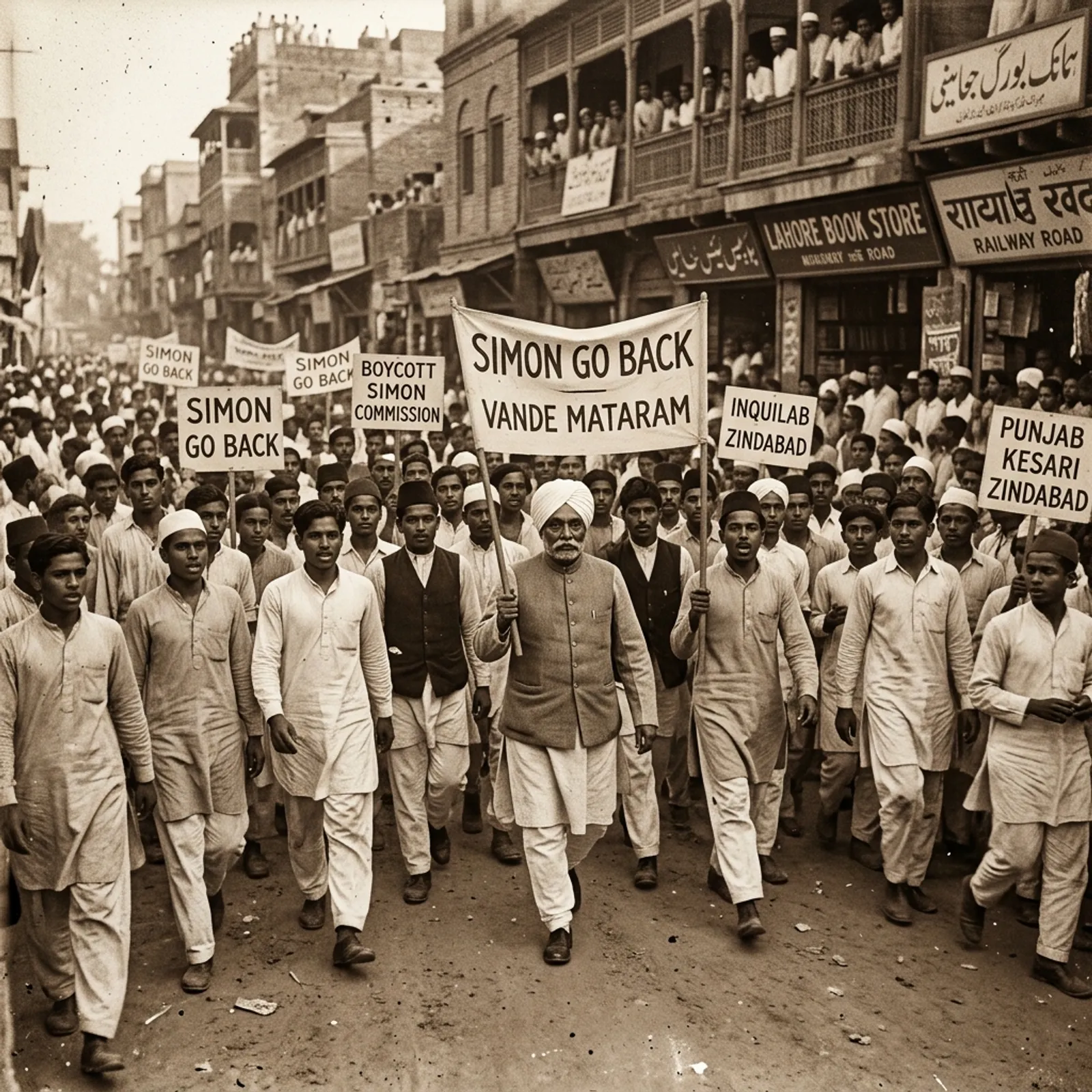
- Lahore Demonstration: Led by Lala Lajpat Rai ('Punjab Kesari') on Oct 30, 1928.
- Martyrdom: Lala Lajpat Rai succumbed to head injuries on November 17, 1928.

Key Recommendations of the Simon Commission Report (May 1930)
7. 5 Key Recommendations of the Simon Report
- 1. Abolition of Diarchy: Replace diarchy with Provincial Autonomy in provinces.
- 2. No Responsible Centre: Denied responsible government at the central level.
- 3. All-India Federation: Proposed a federation incorporating princely states.
- 4. Continuation of Communal Electorates: Retained separate electorates.
- 5. Separation of Burma: Separation of Burma from British India and creation of Sindh/Orissa.
Nehru Report (1928), GOI Act 1935 & Prelude to Civil Disobedience
8. Far-Reaching Impact on Indian Freedom Struggle
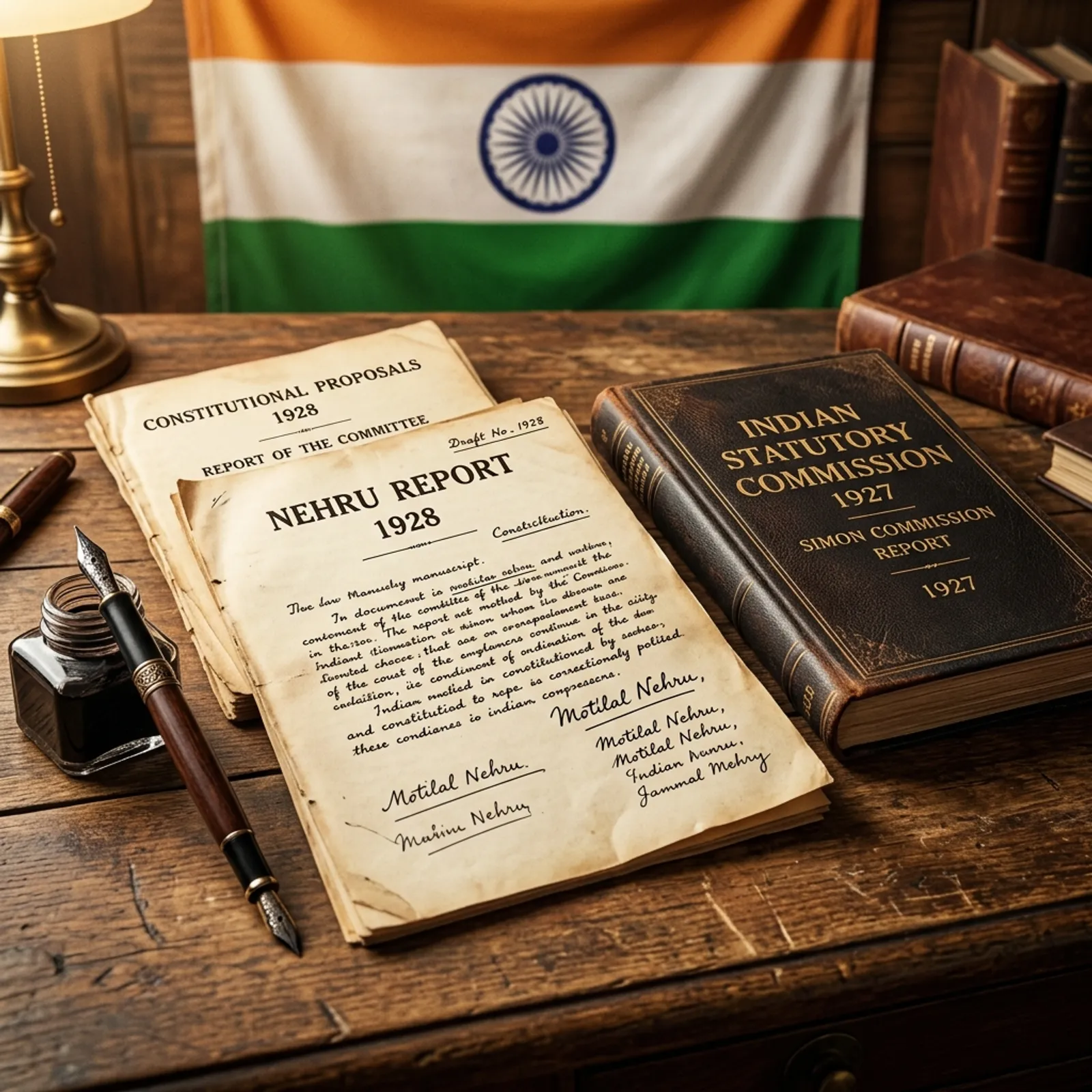
- Nehru Report (1928): Drafted by Motilal Nehru in response to Birkenhead's challenge.
- GOI Act 1935: Direct legal outcome incorporating provincial autonomy.
- Purna Swaraj & Civil Disobedience: Paved the way for the 1929 Lahore session resolution and 1930 Dandi March.

MPPSC & UPSC Exam Quick Revision Fact Sheet
9. Fast-Track Revision Points for Civil Services
- Appointment Date: November 8, 1927 (London)
- Arrival Date in India: February 3, 1928 (Bombay)
- Chairman: Sir John Simon
- Total Members: 7 Members (All British - White Commission)
- Notable Member: Clement Attlee (PM in 1947)
- Boycott Resolution: INC Madras Session 1927 (Dr. M. A. Ansari)
- Supporters: Justice Party (Madras), Unionists (Punjab), Depressed Classes Association
- Martyrdom of Lala Lajpat Rai: November 17, 1928
- Report Published: May 1930
Practice Questions
1When and where was the Simon Commission (Indian Statutory Commission) formed?
2What was the official statutory title of the Simon Commission?
3Why did the Simon Commission face unanimous opposition across India?
4Which of the following political parties/organizations did NOT boycott the Simon Commission?
5In which session of the Indian National Congress was the decision taken to completely boycott the Simon Commission?
6Which great freedom fighter was fatally injured during the police lathi charge while protesting against the Simon Commission in Lahore?
7'Every blow struck on my body will be a nail in the coffin of the British Empire' - Who made this statement?
8Which constitutional document was prepared by Indians in 1928 in response to the Simon Commission challenge?
Frequently Asked Questions
Article Sources
3 sources
Article Sources
3 sources
साझा करें
Related Articles
Join Aakar IAS Community
Get daily Current Affairs PDFs directly on your WhatsApp, or join our official Telegram & WhatsApp channels.