

Key Highlights
1. Concept & Definition of Disaster Management
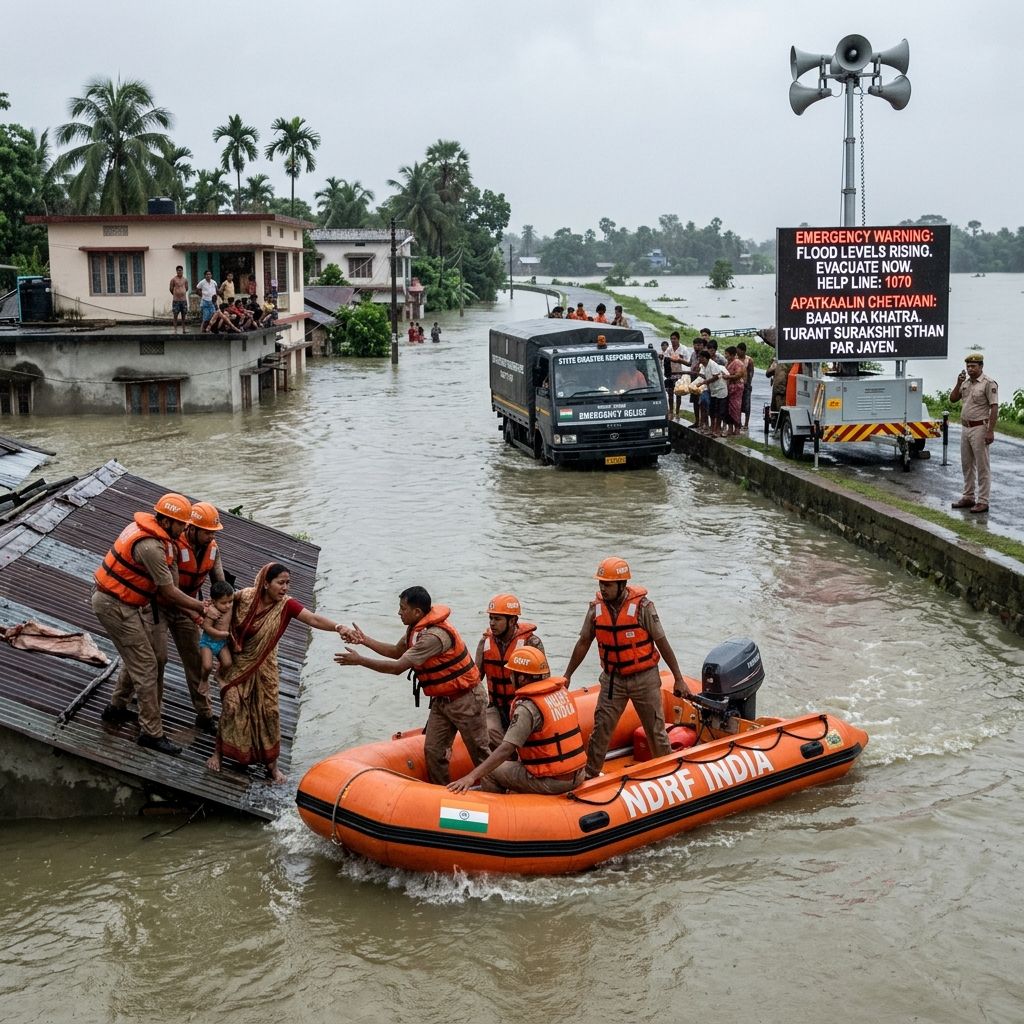
A disaster is a sudden, catastrophic event that severely disrupts the normal functioning of a community or society, causing widespread human, material, economic, or environmental losses that exceed the affected community's ability to cope using its own resources. Disaster Management is a continuous, integrated process of planning, organizing, coordinating, and implementing measures necessary for risk reduction, emergency response, relief, and post-disaster rehabilitation.
2. Classification of Disasters: Natural vs. Man-made
| Category of Disaster | Examples & Sub-types |
|---|---|
| Natural Disasters | • Geophysical: Earthquakes, Tsunamis, Landslides, Volcanic Eruptions. • Meteorological: Cyclones, Tornadoes, Hailstorms, Cloudbursts. • Hydrological/Climatic: Floods, Droughts, Heat Waves, Cold Waves. • Biological: Pandemics (e.g., COVID-19), Locust Attacks. |
| Man-made Disasters | • Industrial/Chemical: Toxic gas leaks (e.g., Bhopal Gas Tragedy 1984), chemical explosions. • : Chernobyl, Fukushima nuclear disasters. • : Major train accidents, plane crashes, structural collapses. • : Riots, terrorism, stampedes, armed conflict. |
3. Disaster Management Cycle
- 1. Pre-Disaster Phase: Prevention, Hazard Mitigation, and Community Preparedness.
- 2. During-Disaster Phase: Immediate Emergency Response, Search & Rescue operations, and First Aid.
- 3. Post-Disaster Phase: Relief Distribution, Rehabilitation, and Reconstruction (Build Back Better).
4. Institutional Framework in India
| Level | Authority / Body | Head / Chairperson |
|---|---|---|
| National Level | National Disaster Management Authority (NDMA) | Prime Minister of India |
| State Level | State Disaster Management Authority (SDMA) | Chief Minister of State |
5. High-Yield Revision Takeaways for MPPSC & UPSC
6. Related Study Material & Interlinked Notes
Disaster Management (Amendment) Act 2025: UDMA Section 41A Notes
International Organizations & Headquarters List
Population Policy of India: NPP-2000 Notes
7. Conclusion
Disaster management is an essential subject for MPPSC Mains GS Paper 3 and UPSC CSE. A clear understanding of the disaster management cycle, natural vs man-made classification, and NDMA framework ensures high-scoring answer writing.
Practice Questions
1Under which Act was the National Disaster Management Authority (NDMA) established?
2Who is the Chairperson of the State Disaster Management Authority (SDMA)?
3The Bhopal Gas Tragedy (1984) is an example of which type of disaster?
4In which year was the National Disaster Response Force (NDRF) constituted?