Supercomputers in India: History, Father of Supercomputing, Full List & Specs | MPPSC & UPSC Notes
Complete study guide covering Father of Indian Supercomputing Dr. Vijay Bhatkar, PARAM 8000 (1991), C-DAC, National Supercomputing Mission (NSM), AIRAWAT (Rank 75), and PARAM Pragya (250 AI Petaflops).
Supercomputers in India: Key Facts & Overview
1. Which is the fastest supercomputer in India currently?
Answer: Currently, PARAM Pragya (250 AI Petaflops launched at IIT Delhi Sonipat in 2026) and AIRAWAT – PSAI (13.17 Petaflops peak at C-DAC Pune, ranked 75th globally in June 2023 TOP500) are India's fastest AI supercomputing systems.
2. Who is known as the Father of Indian Supercomputing?
Answer: Dr. Vijay Bhatkar is recognized as the Father of Indian Supercomputers. He led C-DAC to build India's 1st indigenous supercomputer PARAM 8000 in 1991.
3. How many supercomputers are there in India?
What is a Supercomputer? Overview & Performance Metrics
Supercomputers are high-performance computing systems explicitly engineered to process extremely complex, large-scale mathematical computations at extraordinary speeds. Their computational capacity exceeds standard commercial personal computers by several orders of magnitude.
Performance Metric: The computational speed of a supercomputer is measured in FLOPS (Floating-Point Operations Per Second), representing the number of floating-point arithmetic calculations executed per second.
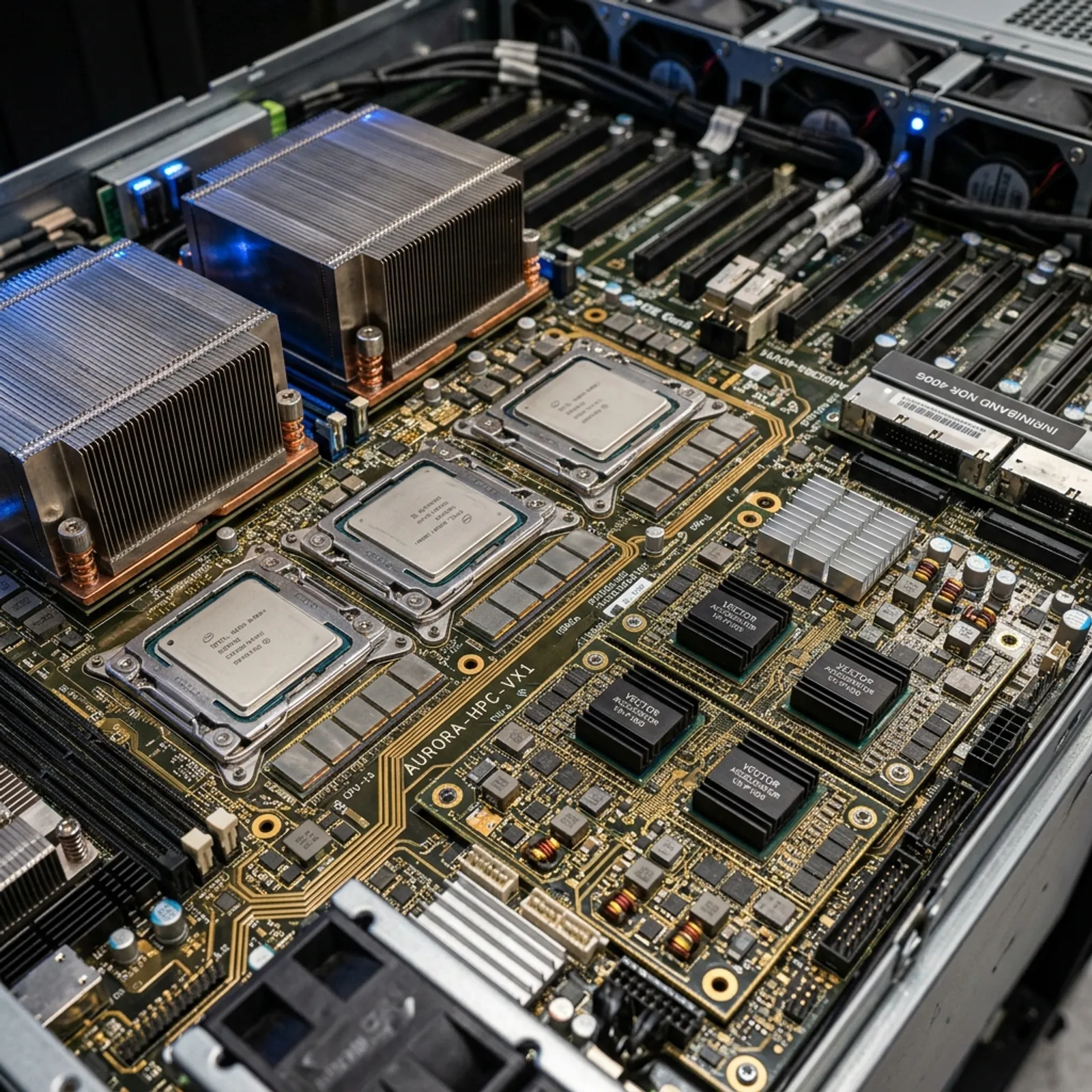
Parallel Processing Architecture: Employs thousands of interconnected CPUs and GPU processing units operating simultaneously. Large computational workloads are decomposed into smaller sub-tasks processed in parallel.
Specialized Purpose Computers: Apart from general scientific research, specialized supercomputers have been developed for targeted tasks—such as Belle, Hydra, and Deep Blue designed for playing grandmaster chess.
Key Features & Architectural Characteristics of Supercomputers
The architectural foundations that distinguish supercomputers from standard computing systems include:
1. Multiple CPUs & Parallel Processing
Architecture: Houses thousands of high-performance CPUs and GPUs working synchronously. Each unit handles arithmetic and logic pipeline execution.
2. Extreme Computation Speed
High Throughput: Capable of executing quadrillions of floating-point operations per second to complete massive datasets in real time.
3. High Storage Capacity & Throughput
Global History of Supercomputing & World's Top Supercomputers
Evolution of Global Supercomputing
High-performance computing accelerated in the late 1950s, driven by US defense and scientific research funding:
1976 - Cray-1: Designed by Seymour Cray, Cray-1 pioneered commercial vector processing architecture.
1985 - Cray-2: A 4-processor supercomputer that became the first system to break the 1 Gigaflop (1 Billion FLOPS) speed barrier.
2008 - IBM Roadrunner: Became the first supercomputer to break the 1 Petaflop (1,000 TFLOPS) barrier.
World's Leading Supercomputing Systems
Supercomputing Development in India & Key Scientific Institutions
Historical Background: The 1987 US Embargo
India's supercomputing program gained decisive momentum after the US government denied the export of the Cray X-MP supercomputer to India in 1987. India urgently required the system for weather forecasting and academic research.
This embargo impelled India to embark on a self-reliant path to build indigenous supercomputing infrastructure.
Major Indian Institutions & Indigenous Series
C-DAC (Centre for Development of Advanced Computing): Established in 1988 in Pune; pioneered the famous PARAM series.
BARC (Bhabha Atomic Research Centre): Developed the Anupam supercomputer series for nuclear modeling.
Indian Supercomputers in TOP500 & National Supercomputing Mission (NSM)
Indian Supercomputers in Global TOP500 (June 2023 Data)
According to the official TOP500 supercomputing ranking, India featured 4 prominent systems:
Indian Supercomputing Systems in Global TOP500 (June 2023)
Rank
Site
Supercomputer System
Rmax (TFLOPS)
Rpeak (TFLOPS)
Special Interlinked Coverage: 'PARAM Pragya' AI Supercomputer (2026)
India's Latest 250 AI Petaflops Supercomputer: PARAM Pragya
In August 2026, Prime Minister Narendra Modi inaugurated PARAM Pragya at IIT Delhi Sonipat Campus.
Compute Speed: ~250 AI Petaflops powered by 400 NVIDIA A100 GPUs.
Answer: India operates over 15 major HPC supercomputers under the National Supercomputing Mission (NSM) across premier institutes like IITs, IISc, and C-DAC, with 4 systems listed in global TOP500.
4. Which organization/company builds supercomputers in India?
Answer: C-DAC (Centre for Development of Advanced Computing, Pune) is the premier nodal agency building indigenous supercomputers in India under MeitY and DST.
5. What is the history of supercomputing in India and when was the first supercomputer built?
Answer: Triggered by the 1987 US denial of Cray X-MP exports, India established C-DAC in 1988 and successfully developed PARAM 8000 in 1991.
Summary List of India's Major Supercomputers
Supercomputer
Location & Year
Capacity / Rank
Key Highlight
PARAM 8000
C-DAC Pune (1991)
GigaFLOPS Range
India's First Indigenous Supercomputer
AIRAWAT – PSAI
C-DAC Pune (2023)
13.17 Petaflops (Rank 75)
Highest Ranked Indian System in TOP500
PARAM Siddhi-AI
C-DAC Pune (2020)
5.27 Petaflops (Rank 131)
India's 1st Dedicated AI Supercomputer
PARAM Pragya
IIT Delhi Sonipat (2026)
250 AI Petaflops
Flagship AI Supercomputer with 400 A100 GPUs
Pratyush
IITM Pune
4.01 Petaflops (Rank 169)
Monsoon & Climate Research
Mihir
NCMRWF Noida
2.81 Petaflops (Rank 316)
Medium-Range Weather Prediction
MPPSC & UPSC Exam Relevance: Vital for MPPSC Mains (Paper 3 Unit 7 & 10 - ICT) and UPSC GS-3 Science & Technology syllabus.
Quick Facts: Supercomputer
Parameter
Details
Unit of Performance
FLOPS (Floating-Point Operations Per Second)
Core Characteristic
High Computation Speed & Parallel Processing
Processing Architecture
Multiple CPUs / Processing Units / GPUs
India's Flagship Program
National Supercomputing Mission (NSM)
NSM Announcement
2015 (Outlay: ₹4,500 Crore / $730 Million)
Implementing Agencies
C-DAC (Pune) & IISc (Bengaluru)
India's PARAM Series
Indigenous Supercomputer Series developed by C-DAC
8. Pollution & Smog Prediction: Predicting regional air quality and smog distribution.
Limitations & Technical Challenges
1. Enormous Physical Footprint: Requires over 1,000 sq ft dedicated cleanroom facilities.
2. High Maintenance Costs: Demands specialized parallel operating systems and engineering expertise.
3. Massive Heat Generation: Demands active liquid-cooling infrastructure.
4. Extreme Power Consumption: Consumes average of 4 Megawatts (MW) of electricity.
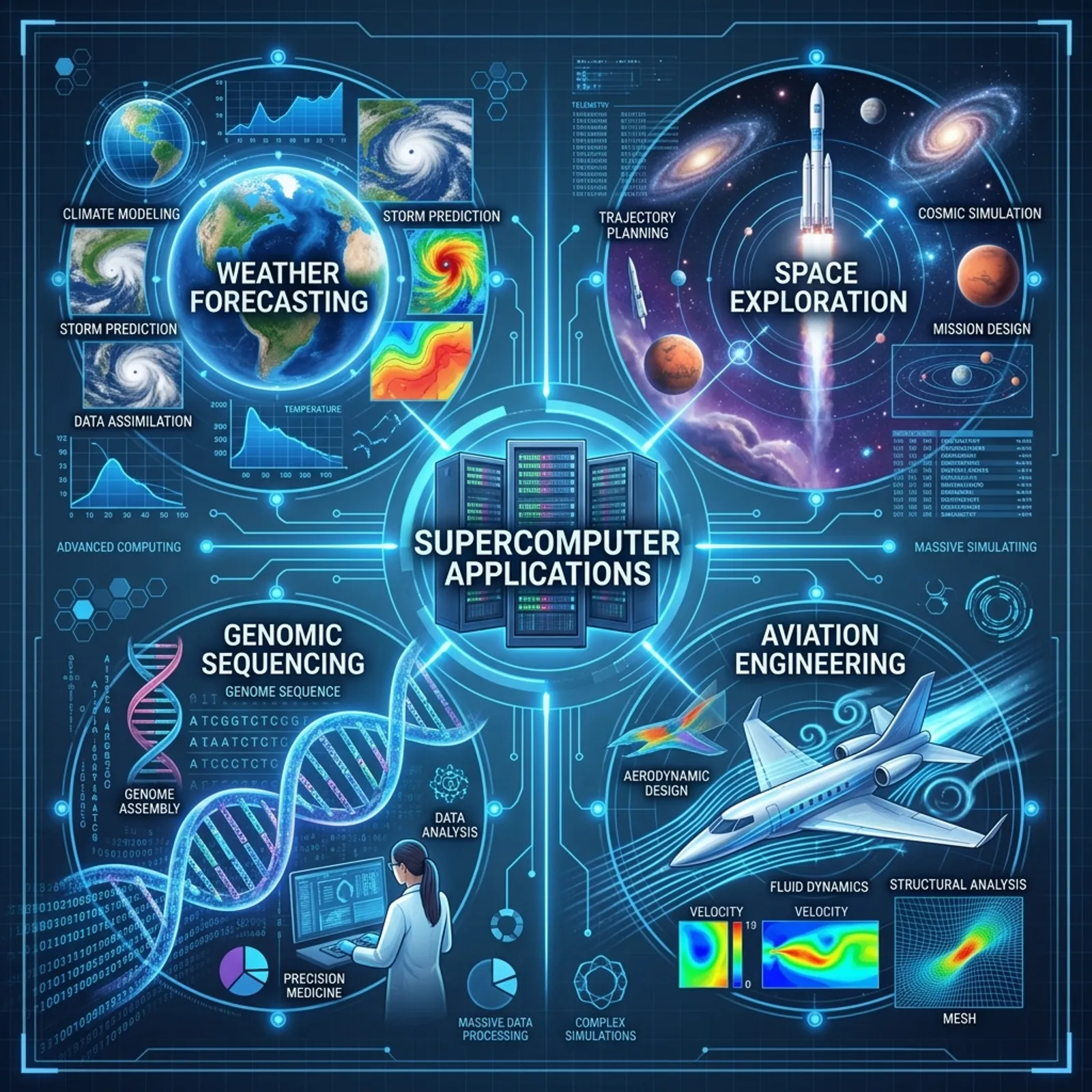
Figure 3: Multi-disciplinary Applications of Supercomputers across Meteorology, Aviation, Space, and Defense.
PARAM Shivay → 1st NSM supercomputer (2020 at IIT BHU).
AIRAWAT → Ranked 75 in June 2023 TOP500 list.
PARAM Pragya → 250 AI Petaflops supercomputer at IIT Delhi Sonipat (2026).
Mains Answer Booster Capsule
"Supercomputing forms the technological cornerstone for weather modeling, genomics, defense simulations, and AI sovereignty, driving India's journey towards scientific self-reliance."