
Key Highlights
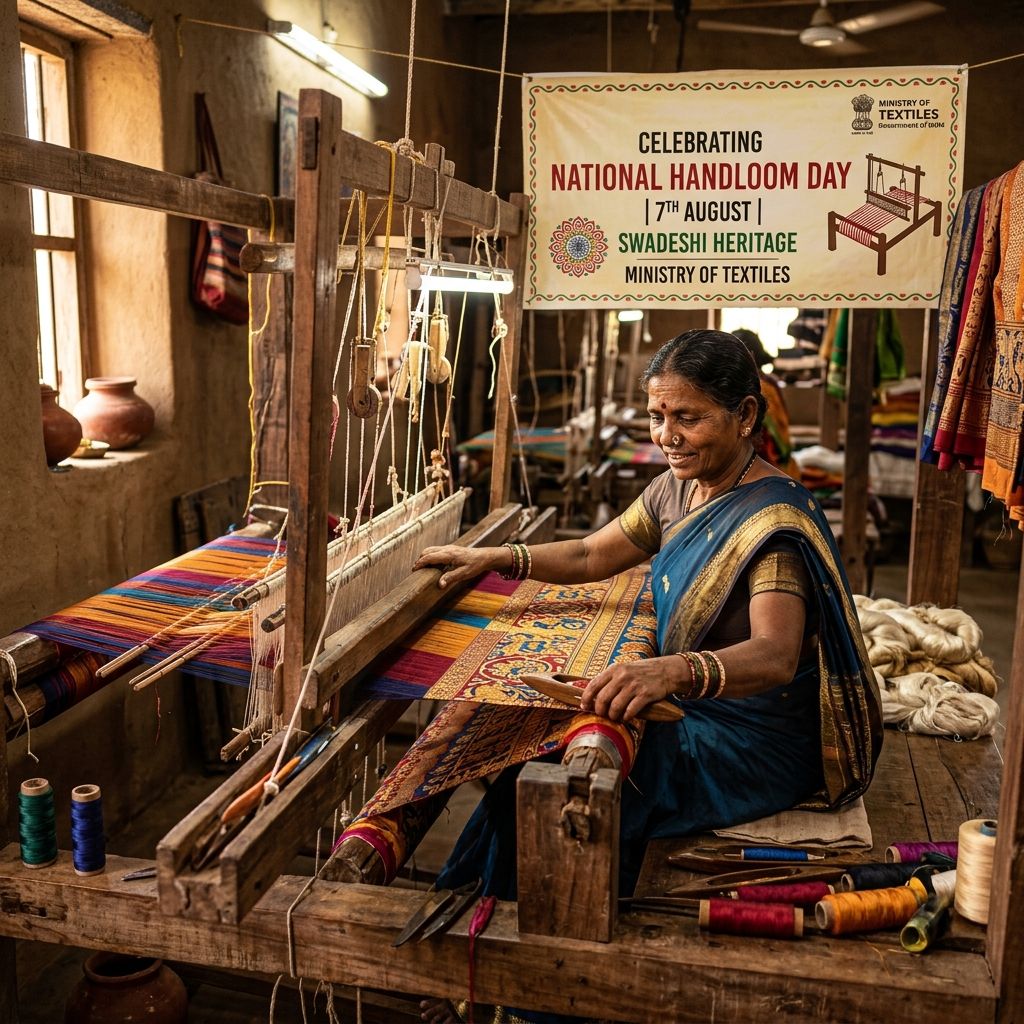
National Handloom Day 2026 is observed across India on 7th August every year. This landmark national event showcases India's magnificent handloom heritage, the socio-economic empowerment of millions of artisans, and the spirit of Atmanirbhar Bharat (Self-Reliant India). The date of 7th August carries immense historical importance as it marks the launch of the Swadeshi Movement on 7th August 1905 in Bengal. Questions regarding handlooms, Swadeshi movement, Ministry of Textiles initiatives, and PIB releases frequently feature in competitive exams (MPPSC Mains Paper 1 & 2 and UPSC GS Paper 1 & 3).
1. Meaning and Definition of Handloom
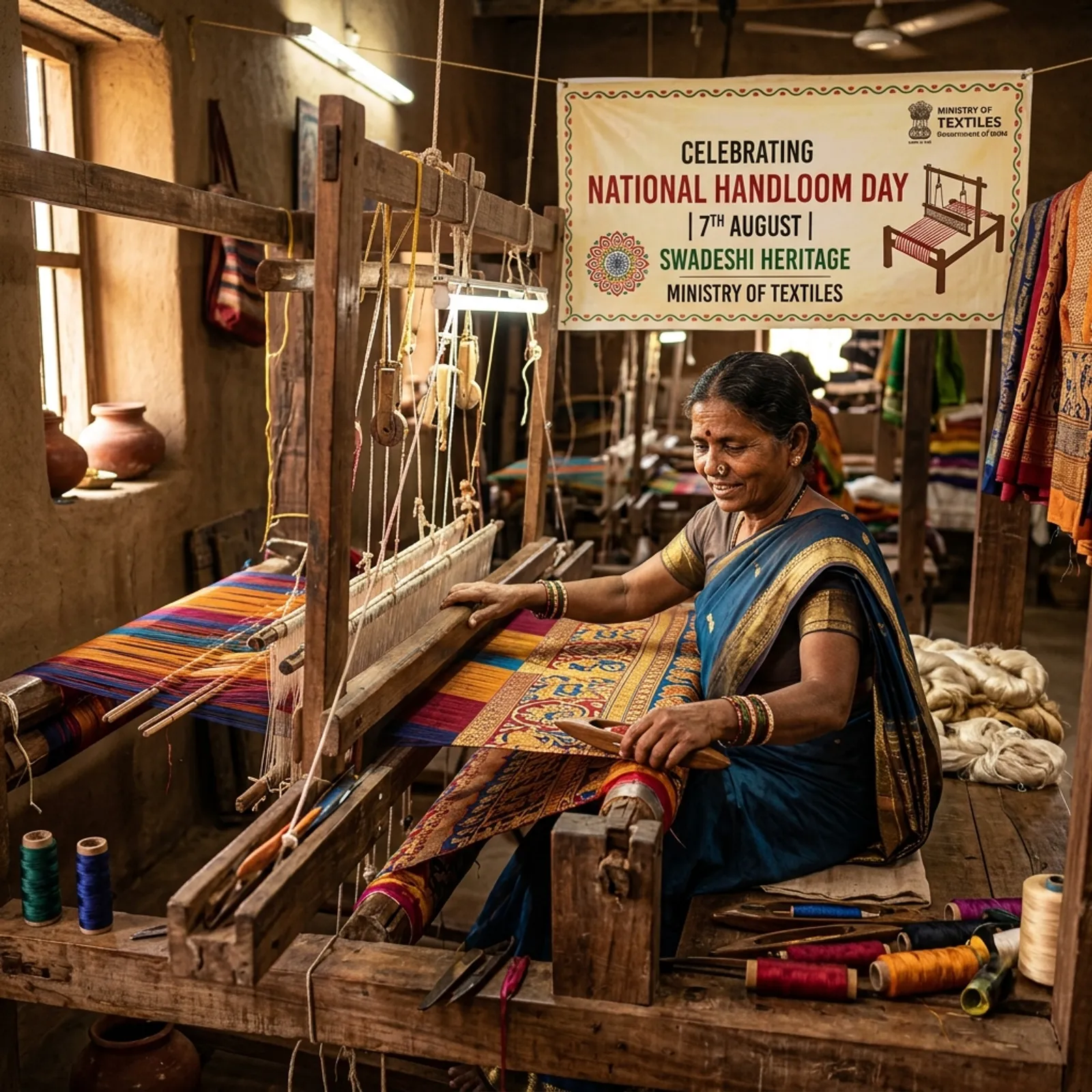
- Meaning: A 'handloom' refers to any loom operated entirely by human energy (hands and feet) without using electricity or fossil fuel power.
- Statutory Definition: Under the Handlooms (Reservation of Articles for Production) Act 1985, a handloom is defined as any loom other than a powerloom used for weaving fabric.
- Cultural Masterpieces: Famous traditional weaves include Chanderi & Maheshwari (Madhya Pradesh), Banarasi, Kanjeevaram, Ikat, Pochampally, and Jamdani.
2. National Handloom Day 2026: Key Highlights
- Observed Date: 7th August every year.
- Inauguration Year: 7th August 2015 (Launched by PM Narendra Modi at Madras University, Chennai).
- Theme 2026: "Honoring Weavers
- Identity of Swadeshi
- Cultural Heritage of India".
- Historical Basis: 1905 Swadeshi Movement proclaimed at Calcutta Town Hall.
- Nodal Ministry: Ministry of Textiles, Government of India.
3. Historical Connection with Swadeshi Movement (1905)
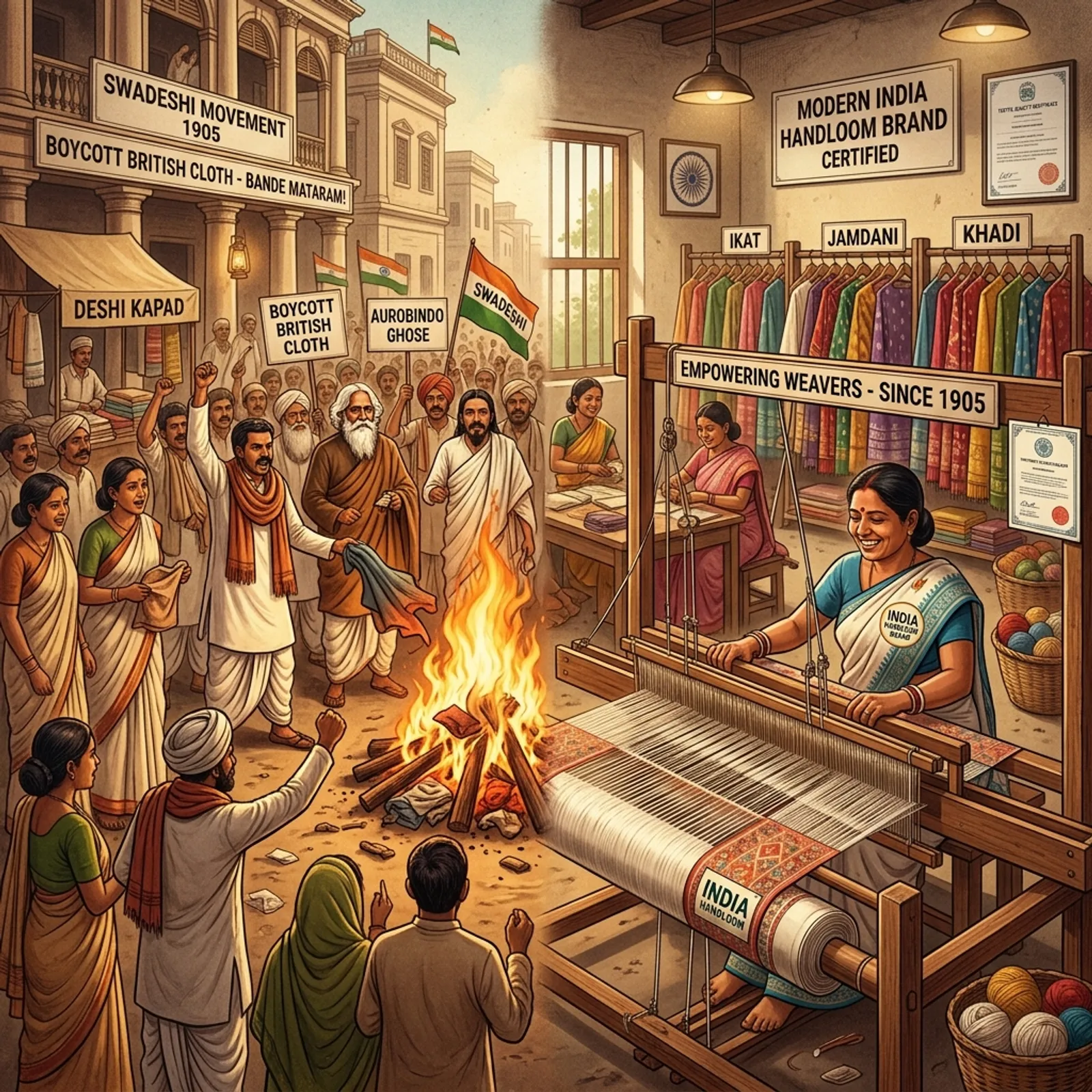
- Proclamation on 7th Aug 1905: The Swadeshi Movement was formally proclaimed on 7th August 1905 at Calcutta Town Hall in opposition to Lord Curzon's Partition of Bengal.
- Boycott & Swadeshi Call: The movement urged citizens to boycott British machine-made textiles and rely on indigenous handloom and khadi products.
- Government Declaration 2015: To honor this historic Swadeshi legacy, the Government of India designated 7th August as National Handloom Day in 2015.
4. Key Statistics from Ministry of Textiles & PIB Reports
- Total Weavers & Workers: 35.22 lakh weavers and allied workers across India.
- Women Workforce: Over 72% of total workers are women, establishing handlooms as a primary driver of rural women's livelihood.
- Active Handlooms: Approximately 28.20 lakh looms operating in the country.
- Rural Dominance: Over 90% of handlooms are located in rural India.
- e-Pehchan Cards: Over 84,000 additional digital e-Pehchan cards issued up to July 2026.
- Exports: Total export of handloom products in 2025-26 reached ₹1330.96 Crore.
5. National Handloom Award & Government Schemes
- National Handloom Award: Highest national recognition presented annually by the Ministry of Textiles to weavers for outstanding craftsmanship and design innovation.
- National Handloom Development Programme (NHDP): Flagship scheme providing cluster development, marketing, and technology support.
- Raw Material Supply Scheme (RMSS): Ensures yarn supply to weavers with a 15% price subsidy on specified yarns.
- India Handloom Brand (2015): Promotes zero-defect, eco-friendly authentic handloom products globally.
- Handloom Mark (2006): Quality certification mark providing collective identity to genuine handloom products.
- GI Protection: Chanderi & Maheshwari sarees (MP), Banarasi, Pochampally Ikat, Kanjeevaram protected under Geographical Indications Act 1999.
🎨 Latest GI Tag & Tribal Art Update 2026 (Featured GI Tag)
🎨 Latest GI Tag & Tribal Art Update 2026 (Featured GI Tag)
🎨 Latest GI Tag & Tribal Art Update 2026 (Featured GI Tag)
🎨 Latest GI Tag & Tribal Art Update 2026 (Featured GI Tag)
Practice Questions
1National Handloom Day is celebrated on 7th August to commemorate which historic event?
2In which year and location was the inaugural National Handloom Day launched?
3According to the Ministry of Textiles, female participation in India's handloom sector is above what percentage?
4When was the 'India Handloom Brand' launched?
5What percentage of price subsidy is provided on specified yarn under the Raw Material Supply Scheme (RMSS)?
6In which year was the 'Handloom Mark' scheme introduced for authenticating handloom products?
7Which two famous textile crafts of Madhya Pradesh are Geographical Indication (GI Tag) protected handloom products?
8What was the approximate total export value of handloom products from India in 2025-26?
Frequently Asked Questions
Article Sources
3 sources
Article Sources
3 sources