
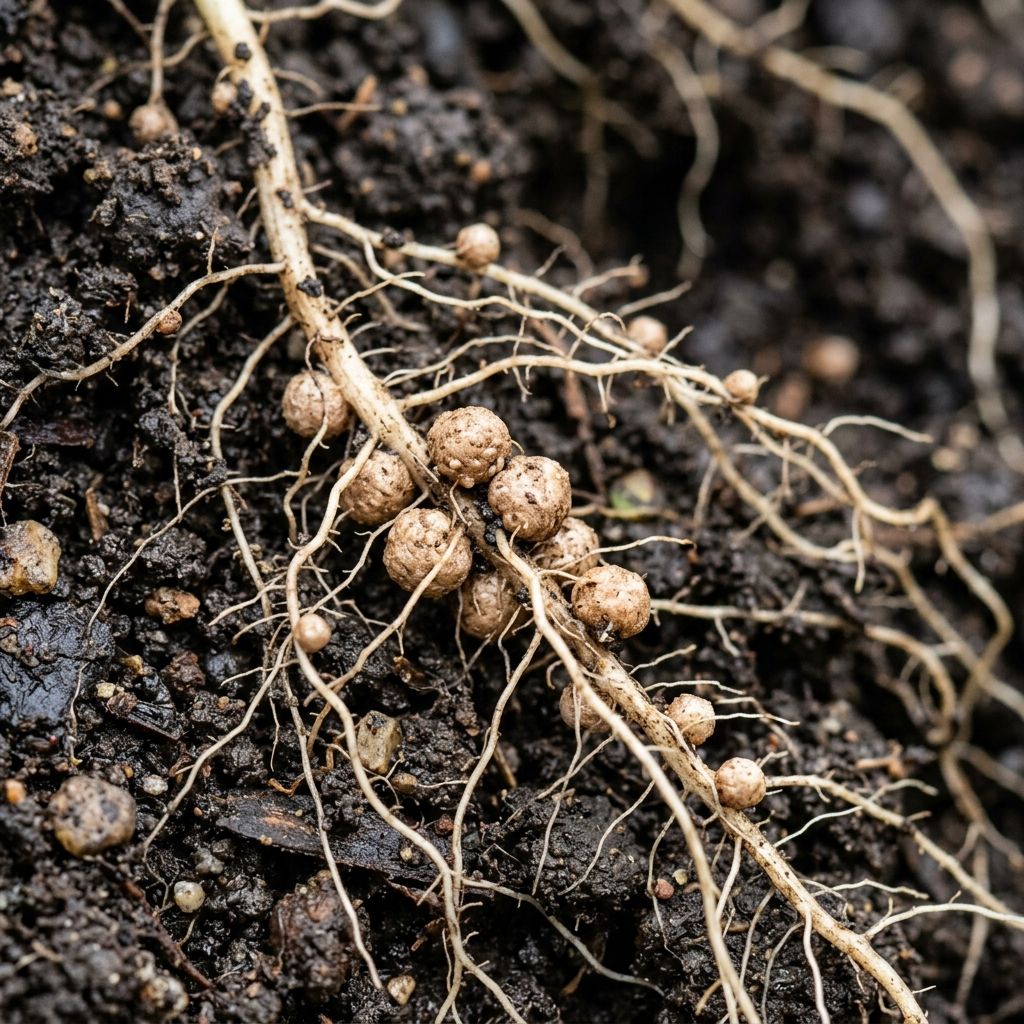
What are Bio-fertilizers? Definition & Examples
Bio-fertilizers are formulations containing living microorganisms (bacteria, fungi, blue-green algae) that enhance nutrient availability (N, P, K) to plants and improve soil fertility naturally when applied to seeds, plant surfaces, or soil.
Types of Bio-fertilizers
Detailed taxonomy of bio-fertilizers classified into N2 fixers (Rhizobium, Azotobacter, Azospirillum, BGA), P solubilizers/mobilizers (PSB, VAM), K solubilizers (KSB), and Plant Growth Promoting Rhizobacteria (PGPR).
Fertilizer Control Order (FCO) Guidelines for Biofertilizers
Comprehensive Fertilizer Control Order (FCO 1985 & recent amendments) statutory guidelines for Bio-fertilizers: Minimum microbial count ($10^7$ CFU/g carrier, $10^8$ CFU/mL liquid), pH range 6.5-7.5, maximum allowable contamination limit ($10^5$), particle size specs, and shelf-life compliance.
Importance and Role of Bio-fertilizers in Agriculture
Agricultural significance of bio-fertilizers: Soil structure restoration, 10-25% crop yield increase, 20-30% reduction in chemical NPK requirement, protection against groundwater nitrate leaching, and national fertilizer subsidy reduction.
Local Bio-fertilizer & Biopesticide Unit Setup & Field Visit
Practical overview of Local Bio-fertilizer & Biopesticide Production Unit for MPPSC Mains Paper 3: Laboratory infrastructure (Autoclave, Laminar Airflow, Fermenter), strain isolation, carrier mixing, biopesticide mass production (Trichoderma, Pseudomonas), and quality assurance procedures.
India's Government Schemes: PM-PRANAM, PKVY & Liquid Technology
In-depth analysis of Indian flagship schemes supporting biofertilizers: PM-PRANAM, Liquid Biofertilizer fertigation technology, and Paramparagat Krishi Vikas Yojana (PKVY).
Bio-fertilizers vs Chemical Fertilizers Comparison
Comparative analysis highlighting eco-friendliness, soil health retention, cost effectiveness, and environmental impact.
MPPSC & UPSC Key Facts & PDF Study Revision Notes
One-liner exam revision points tailored specifically for MPPSC & UPSC competitive exams.
Practice Questions
1According to Fertilizer Control Order (FCO) guidelines, what is the minimum required CFU count per gram for carrier-based biofertilizers?
2Which symbiotic bacterium fixes atmospheric nitrogen in the root nodules of leguminous crops?
3By what mechanism do Phosphate Solubilizing Bacteria (PSB) dissolve insoluble soil phosphate?
4Which statement regarding VAM (Vesicular Arbuscular Mycorrhiza) is correct?
5Which laboratory equipment is used to sterilize culture media and glasswares in a local bio-fertilizer unit?
6What is the primary objective of the PM-PRANAM scheme?
7Which of the following is a free-living nitrogen-fixing bacterium suitable for non-leguminous crops like wheat and maize?
8What is the key advantage of Liquid Bio-fertilizer Technology over traditional carrier-based biofertilizers?