
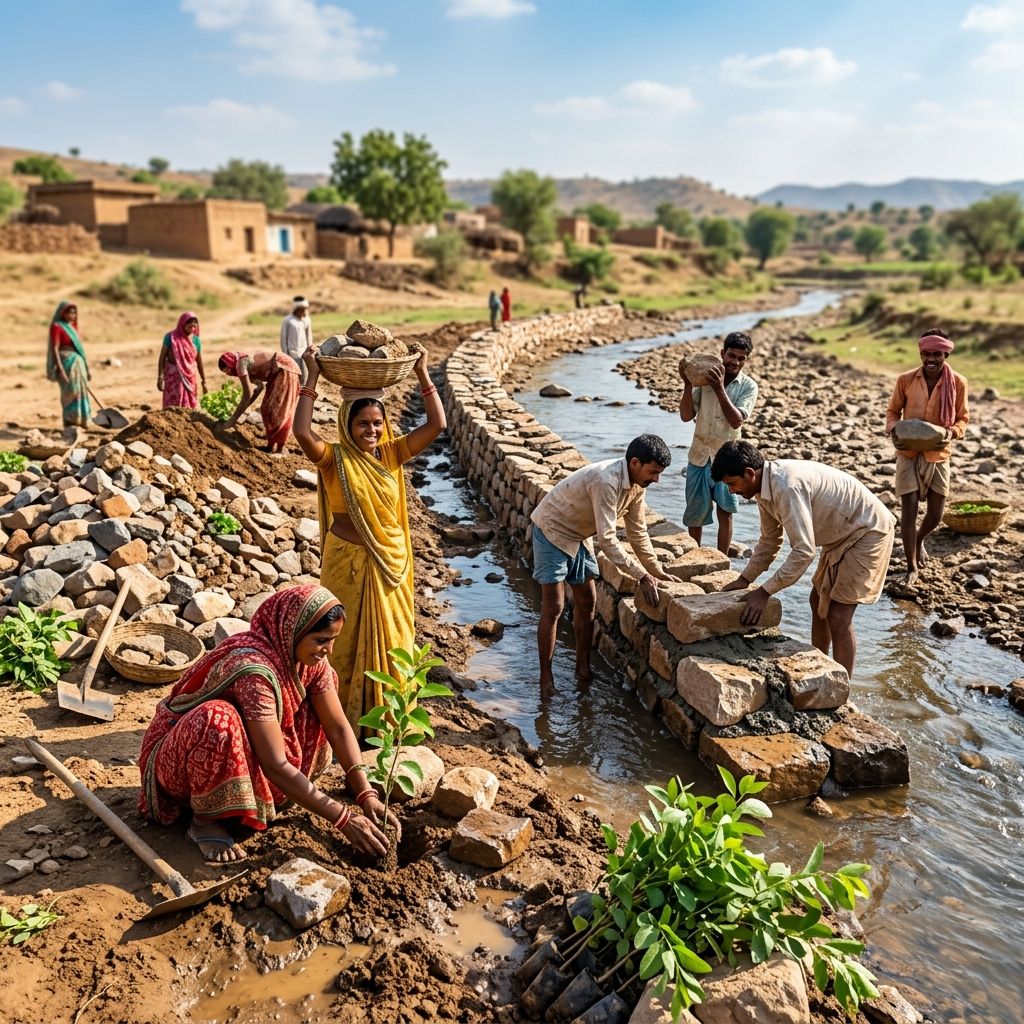

Why in News?
The new rural employment legislation, 'Viksit Bharat-Guarantee for Employment and Livelihood Mission (Rural) Act, 2025' (VB-G RAM G), has come into effect nationwide starting July 1, 2026. The national launch of this historic act is scheduled for July 2, 2026, in Mukkaparipalli village, Tirupati district, Andhra Pradesh, where new rural employment guarantee cards will be distributed to beneficiaries.
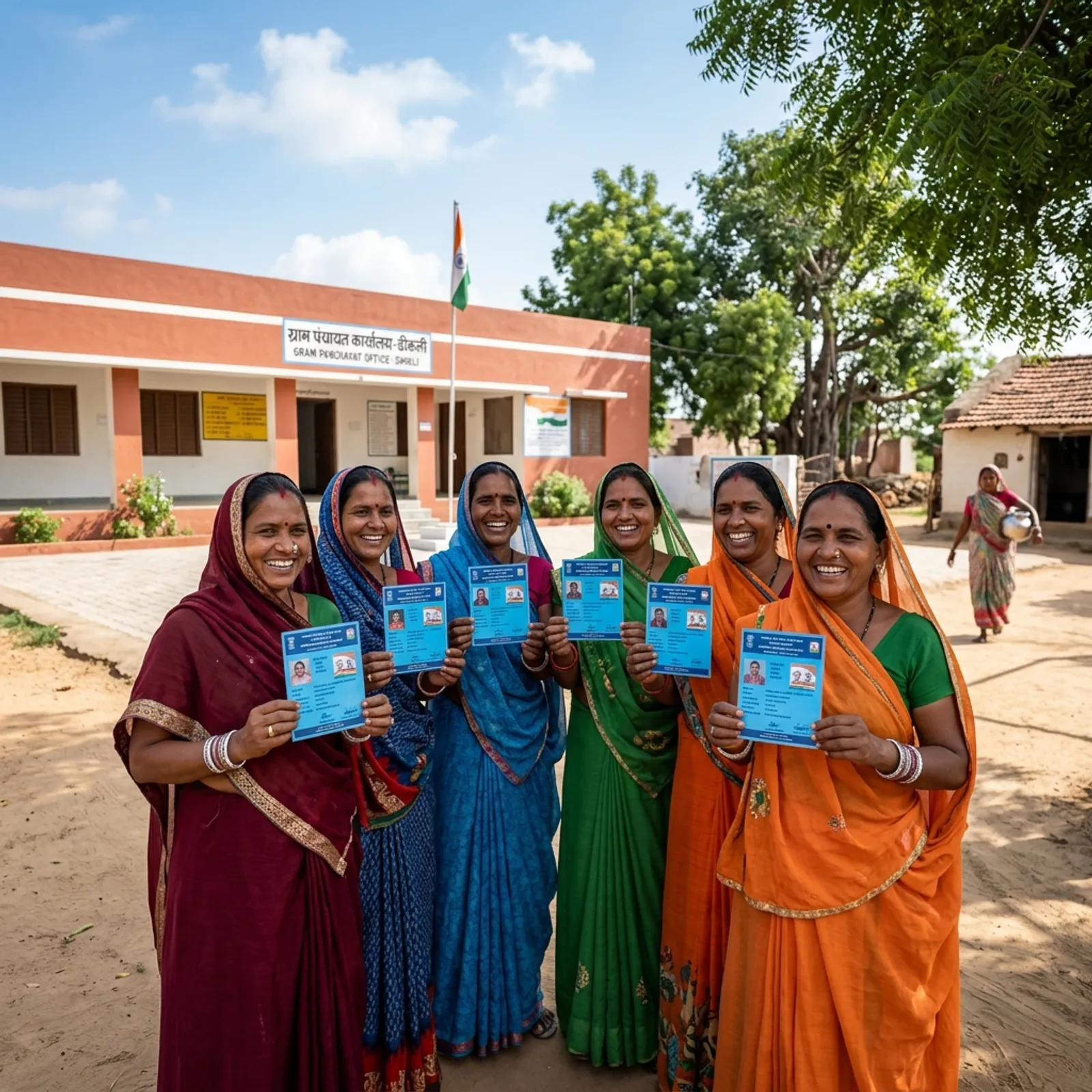
Background: Replaced MGNREGA
This new law replaces the landmark 'Mahatma Gandhi National Rural Employment Guarantee Act' (MGNREGA) of 2005. It marks a significant shift in rural development policy, transitioning from a bottom-up 'demand-driven system' to a centralized 'supply-based scheme'.
Key Provisions and Features
- Increased Employment Guarantee: Legally guarantees 125 days of wage employment per financial year for rural households (previously 100 days).
- Wage Hike: The national average daily wage is raised from ₹298.8 to ₹327.4 per day, netting an average daily increase of ₹28.6.
- Budgetary Support: An initial sum of ₹95,692.31 crore has been released to states and UTs to prevent delays in wage payouts.
- Center-State Sharing Ratio: Set at 60:40 for general states, and 90:10 for North-Eastern, Himalayan states (Uttarakhand, Himachal), J&K, and Union Territories.
- Agri Season Safeguard: States can suspend/limit works for up to 60 days in a financial year during busy farming seasons (sowing & harvesting) to ensure agricultural labor availability.
- VGPP Planning Structure: Projects will be conceptualized via Developed Gram Panchayat Plans (VGPP) and integrated with national spatial planning networks.
Concerns Raised by Workers and Activists
- Lack of Financial Backup: Analysts state that the 125-day promise lacks matching fiscal capacity. No major state has the administration or funds to provide even 60 days of work to all active cardholders.
- Wage Rate Ambiguity: The rules do not clearly define or legally guarantee statutory minimum wage standards.
- Biometric Failures: Activists protest mandatory facial recognition and biometrics, highlighting that technical glitched cause loss of wages and work tracking in remote areas.
- Higher Financial Burden on States: Shifting from a 100% central wage subsidy to a 60:40 cost sharing model will stress the resources of poorer states, leading to uneven execution.
VB-G RAM G Act: Key Exam Facts
- Replaced Act: Mahatma Gandhi National Rural Employment Guarantee Act (MGNREGA), 2005
- Guaranteed Days: 125 days per financial year (previously 100)
- New Average Wage: ₹327.4 per day (Increase of ₹28.6)
- Fund Share (Center:State): General States (60:40), NE & Hill States/UTs (90:10)
- Planning Strategy: Developed Gram Panchayat Plans (VGPP) integrated with national spatial mapping
Practice Questions
1Which former rural employment act has been replaced by the 'VB-G RAM G Act', effective from July 1, 2026?
2What is the funding sharing ratio determined between the Center and state governments for general states under the new VB-G RAM G Act?
3What is the minimum daily wage rate determined for rural laborers under the new VB-G RAM G Act?
4How many days of guaranteed wage employment in a year are provided to rural households under the VB-G RAM G Act?
5Which Union Ministry of India monitors the implementation of the VB-G RAM G Act?
6What is the primary administrative shift in the new VB-G RAM G Act compared to the old MGNREGA?
7What ratio has been set between the labour and material components under the VB-G RAM G Act?
8Under the VB-G RAM G Act, within how many days must employment be provided to an applicant?
Frequently Asked Questions
Article Sources
1 source
Article Sources
1 source