Uniform Civil Code (UCC) Bill 2026 Passed by Madhya Pradesh Assembly: Key Features & Analysis
The Madhya Pradesh Legislative Assembly has passed the Uniform Civil Code (UCC) Bill, 2026, making it the 4th Indian state after Uttarakhand, Gujarat, and Assam to pass UCC legislation. Read key highlights, Article 44 provisions, and exam insights.
Context & Why in News?
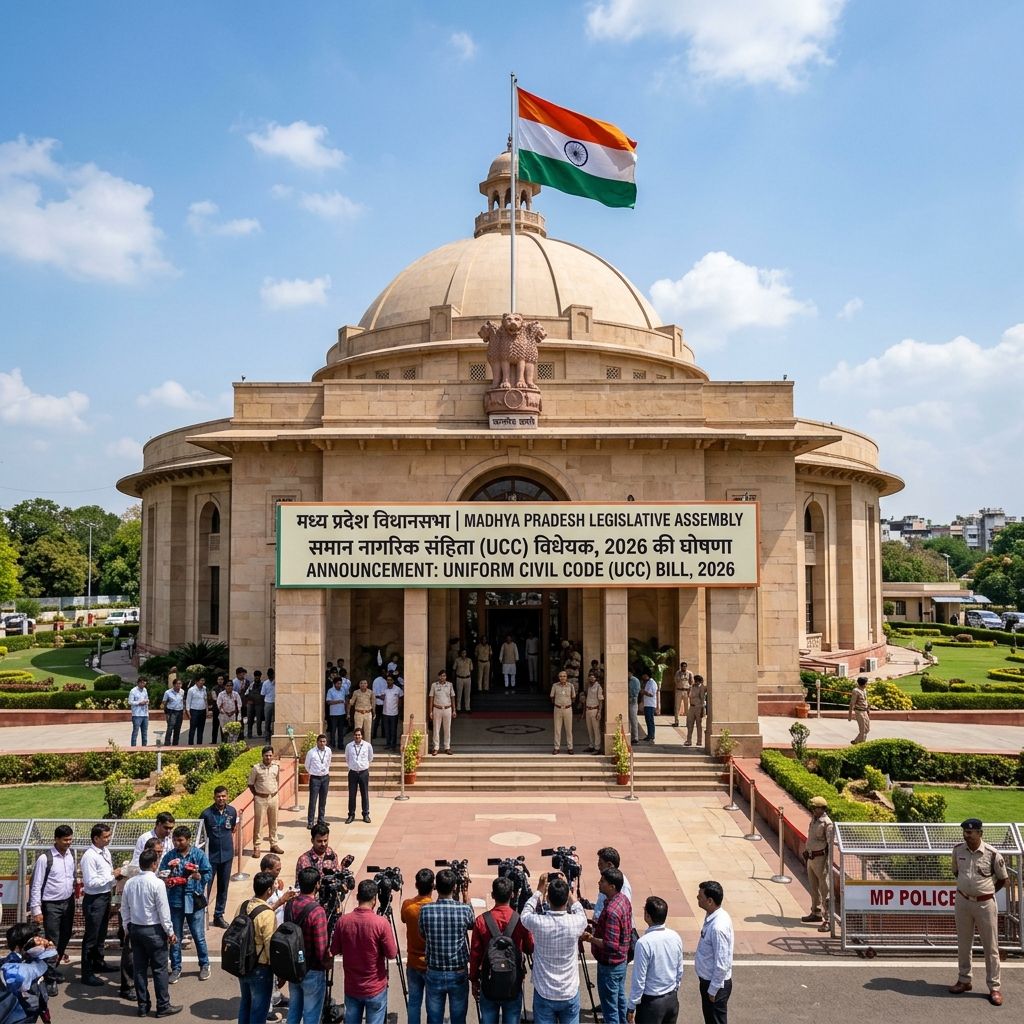
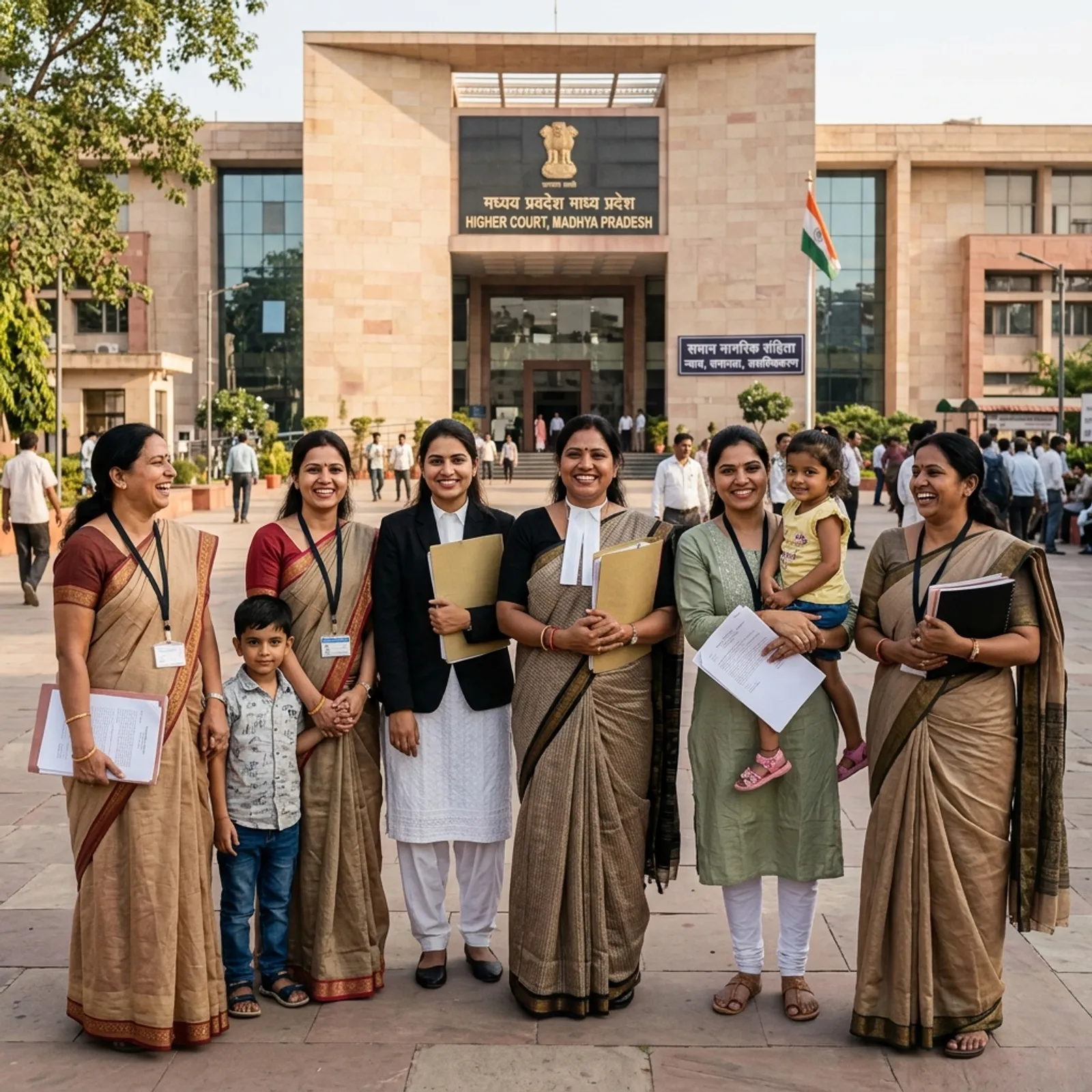
The Madhya Pradesh Legislative Assembly has passed the Uniform Civil Code (UCC) Bill, 2026. With this, Madhya Pradesh has become the fourth state in India to pass a UCC bill, following Uttarakhand, Gujarat, and Assam. This legislation is considered a historic step toward establishing a uniform civil law framework governing marriage, divorce, inheritance, maintenance, guardianship, and property rights. Its core objectives include empowering women and children, promoting social equality, and implementing the mandate of Article 44 of the Indian Constitution.
Key Highlights
Madhya Pradesh Assembly: Passed the UCC Bill 2026.
Fourth State: Became the 4th state to pass the UCC Bill after Uttarakhand, Gujarat, and Assam.
Triple Talaq & Nikah Halala: Criminalized practices like Triple Talaq and Nikah Halala.
What is Uniform Civil Code (UCC) & Constitutional Basis?
What is Uniform Civil Code (UCC)?
Definition: A Uniform Civil Code (UCC) refers to a single set of secular laws governing personal matters such as marriage, divorce, inheritance, adoption, maintenance, and property for all citizens of India, replacing religion-based personal laws.
Constitutional Basis
Article 44
Under the Directive Principles of State Policy (DPSP) in Part IV of the Constitution, the State shall endeavor to secure for citizens a Uniform Civil Code throughout the territory of India.
Related Articles
Key Features of Madhya Pradesh UCC Bill 2026
1. Monogamy Mandate
Polygamy: Polygamy is completely abolished.
Valid Marriage: Only one living spouse permitted at any time.
2. Prohibition of Triple Talaq
Triple Talaq: Instant Triple Talaq (Talaq-e-Biddat) declared illegal and criminalized.
National Integration: Strengthens secularism and national solidarity.
Major Controversies & Challenges
Religious Freedom vs. Uniform Law: Harmonizing Article 25 (Freedom of Religion) with Article 44 (UCC).
Personal Law Concerns: Apprehensions regarding state interference in minority personal laws.
Cultural Diversity: Preserving India's diverse customs and traditions.
Federal Dynamics: Subject falls under the Concurrent List, leading to state-wise legislative variations.
Goa → Portuguese Civil Code, 1867 (Historically uniform personal law state).
ST Exemption → Scheduled Tribes excluded from UCC scope.
Registration → Mandatory for all marriages, divorces, and live-in relationships (within 30 days).
Full Forms
UCC: Uniform Civil Code
DPSP: Directive Principles of State Policy
ART: Assisted Reproductive Technology
Prelims Quick Revision
Article 44 → UCC Provision
Part IV → DPSP Framework
First State → Uttarakhand
4th State → Madhya Pradesh
Goa → Portuguese Civil Code 1867
Triple Talaq → Criminalized
Nikah Halala → Banned
ST Exemption → Full exclusion for Scheduled Tribes
Mains Value Addition
Core Philosophy: The enactment of UCC fulfills the Directive Principle of Article 44 by securing gender justice, legal equity, and protection for women and children across all personal law matters.