

Key Highlights
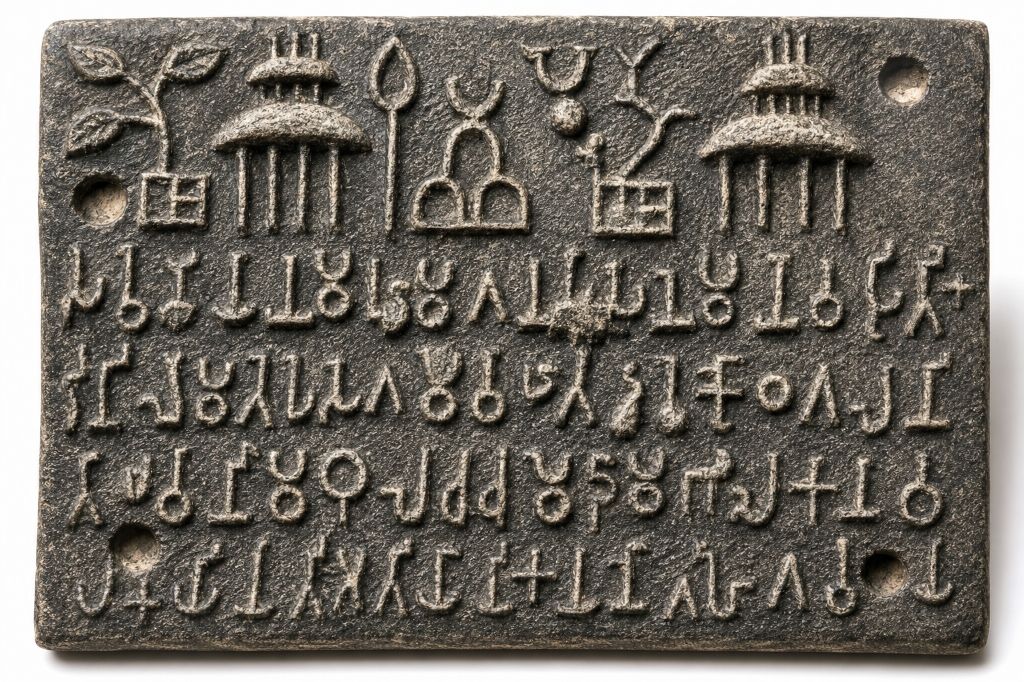
In ancient Indian history and epigraphy, the Sohgaura Copper Plate Inscription and the Mahasthan Stone Inscription hold monumental significance for competitive exams like MPPSC & UPSC. Belonging to the Mauryan Period (3rd Century BCE, during the reign of Emperor Chandragupta Maurya), these two records serve as the earliest direct archaeological evidence of Disaster Management, State Famine Relief, Public Granaries (Koshthagara), and the Welfare State model in ancient India.
1. Sohgaura Copper Plate Inscription: Location & History
- Where is Sohgaura Located?: Discovered at Sohgaura village on the Rapti river in Gorakhpur district, Uttar Pradesh. (Note: Sohgaura is also an ancient Chalcolithic site).
- Which King / Period?: Mauryan Period (approx. 300 BCE / 3rd Century BCE, reign of Chandragupta Maurya).
- Who Issued It?: Issued by the Mahamatras (high royal officials) of Shravasti.
- Script & Language: Mauryan Brahmi Script and Prakrit Language.
- Core Subject: Decrees the establishment of two public granaries (Koshthagara) in the region to store grain exclusively reserved for emergency famine relief.
2. Mahasthan Stone Inscription: Location & Famine Policy
- Where is Mahasthan Located?: Found at Mahasthangarh on the Karatoya river in Bogra district, Bangladesh (anciently known as Pundranagar or Pundravardhana).
- Core Provisions: Records famine relief during a severe drought in Pundranagar. The Mauryan Emperor ordered officials to distribute paddy from state granaries and provide financial assistance in Gandaka coins.
- Emergency Credit & Loan Policy: Stipulated that once prosperity returned, citizens must return the paddy and Gandaka coins back to the state treasury.
3. MPPSC & UPSC Model Question Answers (2, 7 & 10 Marks)
- Question 1 (2 Marks): What is the historical significance of the Sohgaura Copper Plate?
- Answer: Discovered in Gorakhpur (UP), it is the earliest known copper plate inscription in India (3rd Century BCE). It provides the first archaeological evidence of Mauryan disaster management and state granaries (Koshthagara) established for famine relief.
- Question 2 (7 Marks): Highlight the famine relief policy outlined in the Mahasthan Stone Inscription.
- Answer: Found at Bogra (Bangladesh), the Mahasthan inscription records Mauryan famine relief during a severe drought in Pundranagar. The Emperor instructed officials to distribute paddy from state granaries and provide emergency financial credit in 'Gandaka' coins, with a clear policy that citizens return the grain and money once normal agricultural conditions returned.
- Question 3 (10 Marks): 'The concept of a Welfare State and Disaster Management existed during the Mauryan Period.' Critically analyze with reference to Sohgaura and Mahasthan inscriptions.
- Answer Structure: Introduction Sohgaura Copper Plate (Gorakhpur, 2 granaries, reserved grain) Mahasthan Inscription (Pundranagar famine, paddy distribution, Gandaka coin loans, repayment clause) Alignment with Kautilya's Arthashastra Proof of Welfare State Model Conclusion.
Practice Questions
1Which is considered the first copper plate inscription of India?
2From which modern location/country was the Mahasthan Stone Inscription discovered?
3Which Mauryan king's reign is the Sohgaura copper plate associated with?
4Which coin is mentioned in the Mahasthan inscription for famine relief credit?
5What does the four-pillared two-storeyed structure engraved on the Sohgaura copper plate represent?