

Key Highlights
1. Introduction — Bharat Ratna (India's Highest Civilian Award)
In India, the world's largest democracy, visionary leaders and contributors are honored with the nation's highest civilian award, Bharat Ratna. Established in 1954, this award recognizes "exceptional service/performance of the highest order in any field of human endeavour". Click here for comparison of 5 Highest Civilian Awards.
From freedom fighters and statesmen to musicians, scientists, and sports icons, the recipients reflect the diversity and richness of India's national life. As of 2026, a total of 53 personalities have been conferred this honor, including eminent foreign nationals.
2. History & Evolution of Bharat Ratna
- Institution (1954): Established in January 1954 by the then President of India, Dr. Rajendra Prasad.
- Original Scope: Initially limited to achievements in Arts, Literature, Science, and Public Services.
- 2011 Amendment: In December 2011, eligibility was expanded to include "any field of human endeavour", enabling athletes like Sachin Tendulkar to become eligible.
- Posthumous Provision (1955): The original 1954 statutes did not allow posthumous awards. This was amended in January 1955. Lal Bahadur Shastri (1966) was the first posthumous recipient.
3. Benefits, Facilities & Prize Money of Bharat Ratna
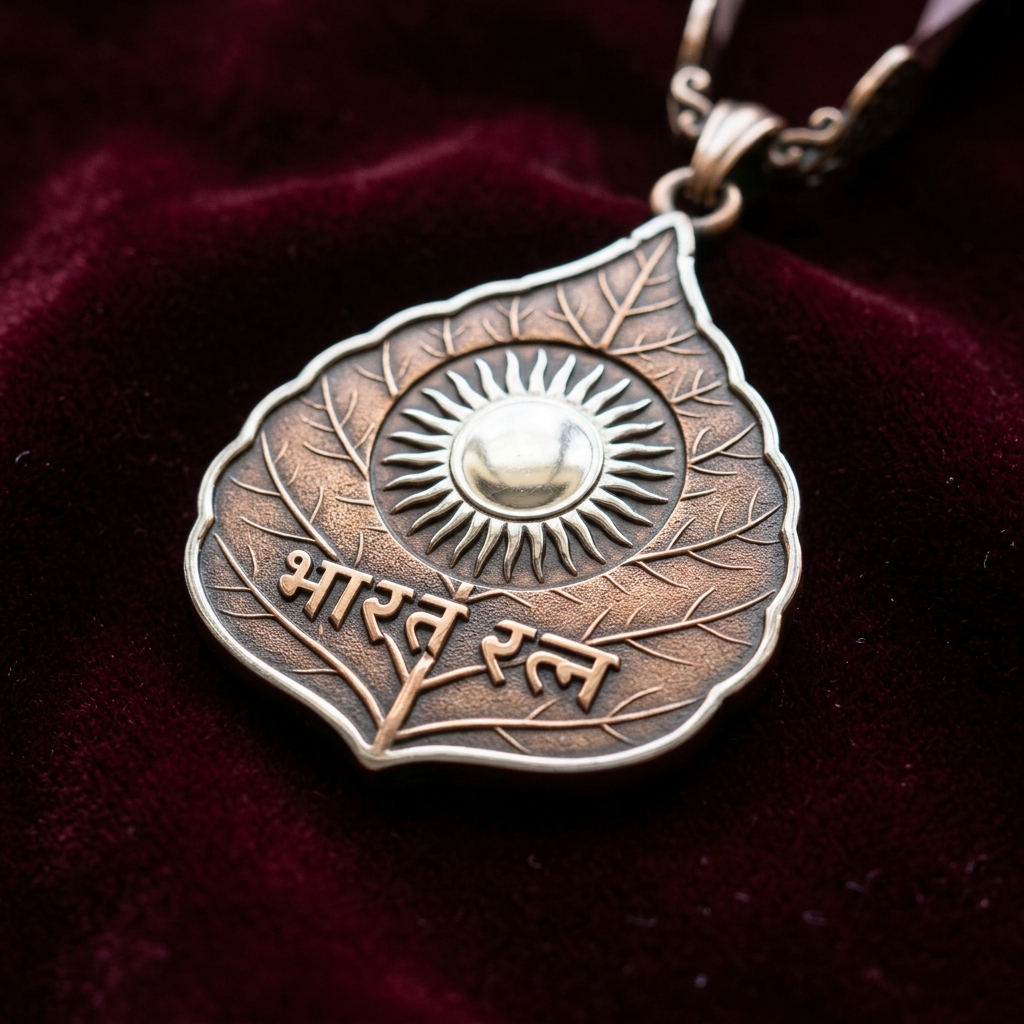
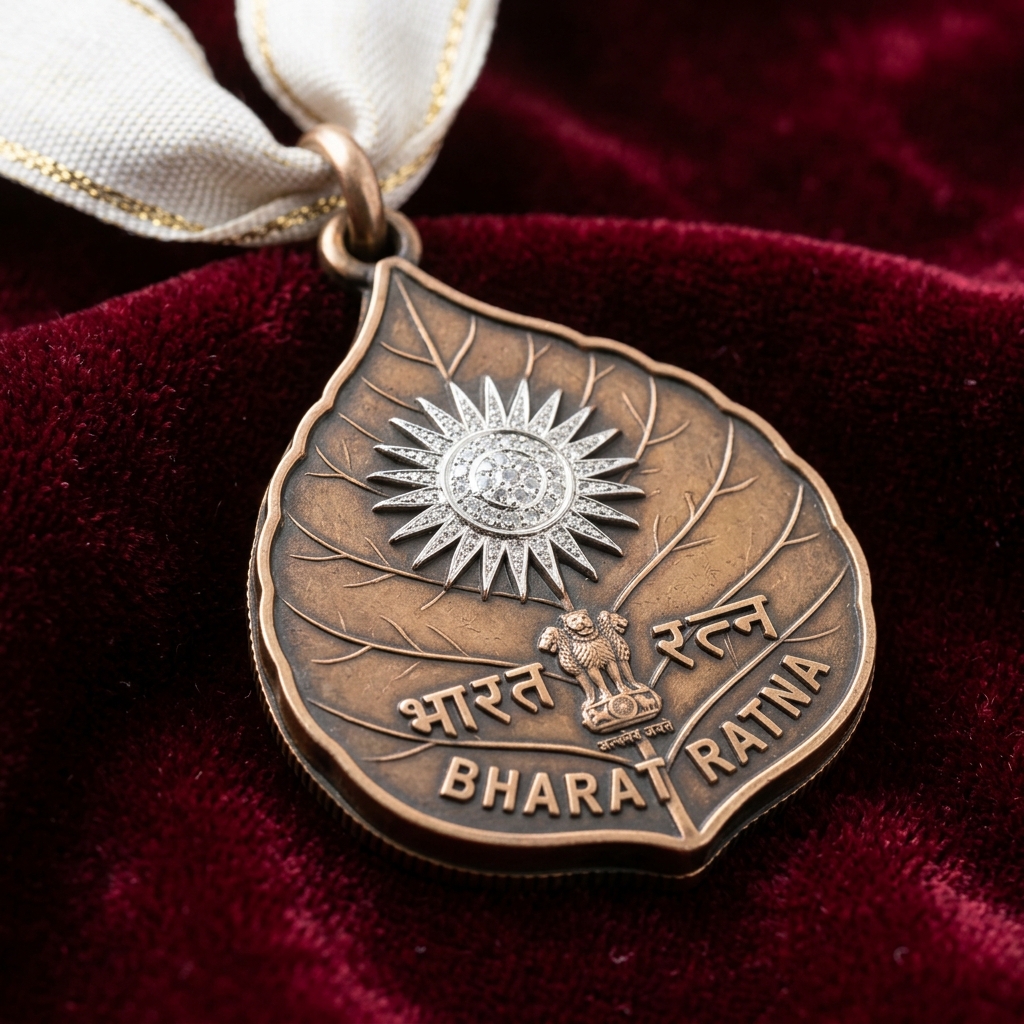
- Monetary Reward: Bharat Ratna carries no cash reward (₹0). Recipients receive a Sanad (certificate) signed by the President and a medallion in the shape of a peepal leaf.
- Order of Precedence: Recipients hold Rank 7A/7 in the Indian Order of Precedence, on par with Chief Ministers, former Prime Ministers, and Cabinet Ministers.
- Travel Privileges: Lifetime complimentary First Class air travel on Air India and Executive Class travel on Indian Railways.
- State Guest Status: Treated as a State Guest with full VIP/VVIP security when traveling to any Indian state.
- Diplomatic Passport: Entitled to hold an Indian Diplomatic Passport providing special privileges during international travel.
4. Who Refused to Accept the Bharat Ratna Award?
A frequently asked question in competitive exams and Google search is 'Who refused to accept the Bharat Ratna?':
- Maulana Abul Kalam Azad: India's first Education Minister initially refused the award stating that selection committee members shouldn't accept the honor themselves. He was later conferred the award posthumously in 1992.
- Netaji Subhash Chandra Bose Controversy (1992): The 1992 posthumous announcement was opposed by his family as his death was not conclusively established. Following Supreme Court proceedings, the award press communique was withdrawn in 1997 — the sole withdrawn instance in history.
5. Nomination, Selection Process & Eligibility Rules
- Eligibility Criteria: Open to any person without distinction of race, occupation, position, or sex for exceptional performance in any field.
- Prime Minister's Recommendation: Recommendations are made directly by the Prime Minister to the President of India without formal committee processes.
- Annual Limit: Maximum of 3 awards per calendar year (exceptions: 4 awarded in 1999, and 5 awarded in 2024).
6. Significance, Constitutional Aspects & Article 18 Rulings
- National Gratitude: Expresses the nation's gratitude to exceptional individuals.
- National Unity: Strengthens national unity by honoring luminaries from diverse regions and fields.
- Source of Inspiration: Serves as a role model and inspiration for future generations.
- Constitutional Aspect (Article 18): The Supreme Court in 'Balaji Raghavan v. Union of India (1996)' held that Bharat Ratna is not a 'title' under Article 18(1) of the Constitution. Hence, recipients cannot use it as a prefix or suffix to their names.
7. Key Exam Facts on Bharat Ratna (Quick Revision)
- First Recipients (1954): C. Rajagopalachari, Dr. S. Radhakrishnan, Dr. C.V. Raman.
- First Female Recipient: Indira Gandhi (1971).
- First Musician Recipient: M.S. Subbulakshmi (1998).
- Youngest Recipient: Sachin Tendulkar (2014, at age 40).
- Foreign Recipients: Khan Abdul Ghaffar Khan (1987 - Pakistan) and Nelson Mandela (1990 - South Africa). Click here to read MP State Awards (Tansen & Kalidas Samman).
- First Posthumous Recipient: Lal Bahadur Shastri (1966). Click here for Disaster Management (Amendment) Act 2025 Study Notes.
- Total Recipients (1954-2026): 53 Dignitaries. Read Commonwealth Games (CWG 2026) India Medal Tally Current Affairs.
8. Complete Chronological List of Bharat Ratna Recipients (1954 – 2026)
नीचे 1954 से लेकर 2025 तक के सभी 53 भारत रत्न विजेताओं का प्रामाणिक वर्षवार विवरण दिया गया है:
| S.No. | Year | Name | Field / Contribution | Key Remarks |
|---|---|---|---|---|
| 1 | 1954 | सी. राजगोपालाचारी | राजनीति | स्वतंत्र भारत के अंतिम गवर्नर-जनरल |
| 2 | 1954 | डॉ. सर्वपल्ली राधाकृष्णन | दर्शन / शिक्षा | प्रथम उपराष्ट्रपति, दूसरे राष्ट्रपति (शिक्षक दिवस 5 सितंबर) |
| 3 | 1954 | सी. वी. रमन | विज्ञान | नोबेल पुरस्कार विजेता (रमन प्रभाव के खोजकर्ता) |
| 4 | 1955 | भगवान दास | दर्शन / स्वतंत्रता संग्राम | दार्शनिक, स्वतंत्रता सेनानी |
| 5 | 1955 | एम. विश्वेश्वरैया | अभियांत्रिकी | मैसूर के दीवान (अभियंता दिवस 15 सितंबर) |
| 6 | 1955 | जवाहरलाल नेहरू | राजनीति | भारत के प्रथम प्रधानमंत्री |
| 7 | 1957 | गोविंद बल्लभ पंत | राजनीति | उत्तर प्रदेश के प्रथम मुख्यमंत्री, केंद्रीय गृह मंत्री |
| 8 | 1958 | धोंडो केशव कर्वे | समाज सेवा / शिक्षा | महिला शिक्षा के अग्रदूत (100वें जन्मदिन पर सम्मानित) |
| 9 | 1961 | डॉ. विधान चंद्र रॉय | चिकित्सा | पश्चिम बंगाल के मुख्यमंत्री (राष्ट्रीय चिकित्सक दिवस 1 जुलाई) |
| 10 | 1961 | पुरुषोत्तम दास टंडन | भाषा / स्वतंत्रता संग्राम | हिंदी भाषा सुधारक, स्वतंत्रता सेनानी |
| 11 | 1962 | डॉ. राजेंद्र प्रसाद | राजनीति | भारत के प्रथम राष्ट्रपति, संविधान सभा के अध्यक्ष |
| 12 | 1963 | डॉ. ज़ाकिर हुसैन | शिक्षा / राजनीति | भारत के तीसरे राष्ट्रपति, शिक्षाविद |
| 13 | 1963 | डॉ. पांडुरंग वामन काने | संस्कृत / इंडोलॉजी | प्रख्यात संस्कृत विद्वान एवं भारतविद् |
| 14 | 1966 | लाल बहादुर शास्त्री | राजनीति | दूसरे प्रधानमंत्री, 'जय जवान जय किसान' (प्रथम मरणोपरांत) |
| 15 | 1971 | इंदिरा गांधी | राजनीति | भारत की प्रथम महिला प्रधानमंत्री |
| 16 | 1975 | वी.वी. गिरि | राजनीति / श्रम | भारत के चौथे राष्ट्रपति |
| 17 | 1976 | के. कामराज | राजनीति | तमिलनाडु के मुख्यमंत्री (मरणोपरांत) |
| 18 | 1980 | मदर टेरेसा | समाज सेवा | नोबेल शांति पुरस्कार विजेता (1979) |
| 19 | 1983 | विनोबा भावे | समाज सेवा | भूदान आंदोलन के प्रणेता (मरणोपरांत) |
| 20 | 1987 | खान अब्दुल गफ्फार खान | स्वतंत्रता संग्राम | 'फ्रंटियर गांधी' (प्रथम विदेशी नागरिक) |
| 21 | 1988 | एम.जी. रामचंद्रन | कला / राजनीति | अभिनेता व तमिलनाडु के मुख्यमंत्री (मरणोपरांत) |
| 22 | 1990 | डॉ. बी.आर. अंबेडकर | कानून / समाज सुधार | भारतीय संविधान के शिल्पकार (मरणोपरांत) |
| 23 | 1990 | नेल्सन मंडेला | राजनीति / मानवाधिकार | दक्षिण अफ्रीका के पूर्व राष्ट्रपति (द्वितीय विदेशी नागरिक) |
| 24 | 1991 | राजीव गांधी | राजनीति | भारत के सबसे युवा प्रधानमंत्री (मरणोपरांत) |
| 25 | 1991 | सरदार वल्लभभाई पटेल | राजनीति | 'लौह पुरुष', प्रथम गृह मंत्री (मरणोपरांत) |
| 26 | 1991 | मोरारजी देसाई | राजनीति | प्रथम गैर-कांग्रेसी प्रधानमंत्री |
| 27 | 1992 | जे.आर.डी. टाटा | उद्योग | टाटा समूह के संस्थापक निदेशक |
| 28 | 1992 | सत्यजीत रे | सिनेमा | अंतरराष्ट्रीय ख्याति प्राप्त फिल्म निर्माता |
| 29 | 1992 | मौलाना अबुल कलाम आजाद | शिक्षा / स्वतंत्रता संग्राम | भारत के प्रथम शिक्षा मंत्री (मरणोपरांत) |
| 30 | 1997 | गुलज़ारीलाल नंदा | राजनीति | दो बार अंतरिम प्रधानमंत्री (मरणोपरांत) |
| 31 | 1997 | अरुणा आसफ अली | स्वतंत्रता संग्राम | भारत छोड़ो आंदोलन की वीरांगना (मरणोपरांत) |
| 32 | 1997 | डॉ. एपीजे अब्दुल कलाम | विज्ञान / रक्षा | 'मिसाइल मैन', 11वें राष्ट्रपति |
| 33 | 1998 | एम.एस. सुब्बुलक्ष्मी | संगीत | कर्नाटक संगीत गायिका (प्रथम संगीतकार विजेता) |
| 34 | 1998 | चिदंबरम सुब्रमण्यम | कृषि / प्रशासन | हरित क्रांति के प्रमुख नीतिगत प्रशासक |
| 35 | 1999 | अमर्त्य सेन | अर्थशास्त्र | नोबेल पुरस्कार विजेता (1998) |
| 36 | 1999 | पंडित रवि शंकर | संगीत | विश्वप्रसिद्ध सितार वादक |
| 37 | 1999 | जयप्रकाश नारायण | राजनीति / समाज सेवा | 'लोकनायक', संपूर्ण क्रांति (मरणोपरांत) |
| 38 | 1999 | गोपीनाथ बोरदोलोई | राजनीति | असम के प्रथम मुख्यमंत्री (मरणोपरांत) |
| 39 | 2001 | लता मंगेशकर | संगीत | 'भारत की स्वर कोकिला' |
| 40 | 2001 | उस्ताद बिस्मिल्लाह खान | संगीत | प्रख्यात शहनाई उस्ताद |
| 41 | 2009 | पंडित भीमसेन जोशी | संगीत | किराना घराने के शीर्ष गायक |
| 42 | 2014 | सचिन तेंदुलकर | खेल | सबसे कम उम्र (40 वर्ष) के विजेता |
| 43 | 2014 | प्रो. सी.एन.आर. राव | विज्ञान | रसायन एवं पदार्थ विज्ञान के प्रख्यात वैज्ञानिक |
| 44 | 2015 | अटल बिहारी वाजपेयी | राजनीति | पूर्व प्रधानमंत्री, प्रखर वक्ता व कवि |
| 45 | 2015 | मदन मोहन मालवीय | शिक्षा | BHU के संस्थापक (मरणोपरांत) |
| 46 | 2019 | प्रणब मुखर्जी | राजनीति | भारत के 13वें राष्ट्रपति |
| 47 | 2019 | नानाजी देशमुख | समाज सेवा | चित्रकूट ग्रामोदय विश्वविद्यालय के संस्थापक (मरणोपरांत) |
| 48 | 2019 | भूपेन हजारिका | संगीत / सिनेमा | प्रख्यात संगीतकार व फिल्म निर्माता (मरणोपरांत) |
| 49 | 2024 | कर्पूरी ठाकुर | राजनीति / सामाजिक न्याय | 'जननायक', बिहार के पूर्व CM (मरणोपरांत) |
| 50 | 2024 | लालकृष्ण आडवाणी | राजनीति | 7वें उप प्रधानमंत्री, पूर्व गृह मंत्री |
| 51 | 2024 | एम.एस. स्वामीनाथन | कृषि विज्ञान | 'हरित क्रांति के जनक' (मरणोपरांत) |
| 52 | 2024 | चौधरी चरण सिंह | राजनीति / कृषि | 5वें प्रधानमंत्री, 'किसानों के मसीहा' (मरणोपरांत) |
| 53 | 2024 | पी.वी. नरसिम्हा राव | राजनीति | 9वें PM, आर्थिक उदारीकरण (1991) के जनक (मरणोपरांत) |
Practice Questions
1Recommendations for Bharat Ratna are sent to the President by whom?
2Who was the first female recipient of the Bharat Ratna award?
3Who was the first musician to receive the Bharat Ratna award?
4In which year was 'any field of human endeavour' included in Bharat Ratna eligibility?
5In which year was the provision for posthumous Bharat Ratna added?
6Which rank is assigned to Bharat Ratna awardees in the Indian Order of Precedence?
7Nelson Mandela, awarded Bharat Ratna in 1990, was former President of which country?
8Which scientist known as father of India's Green Revolution was awarded Bharat Ratna in 2024?