Why in News?
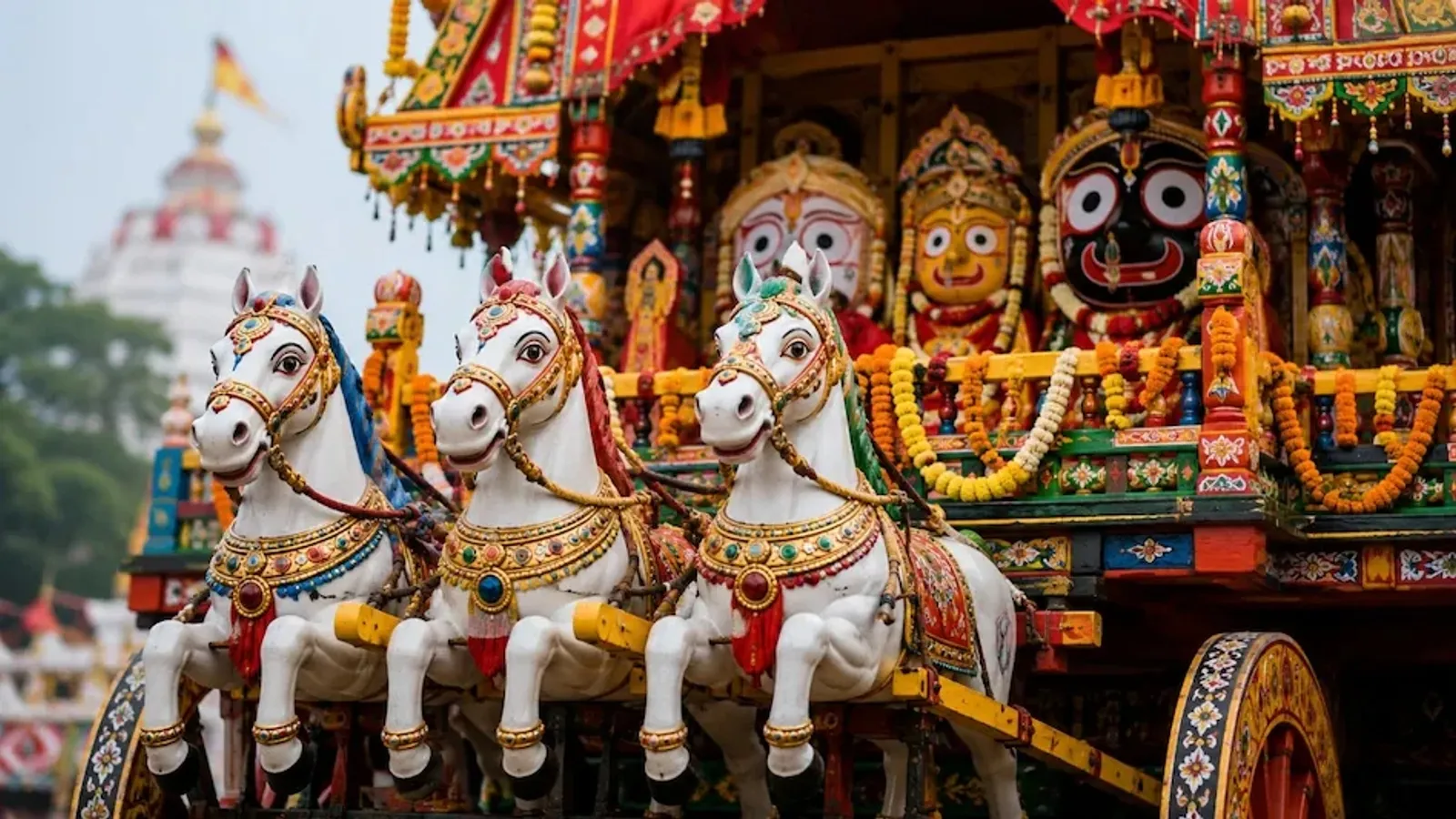
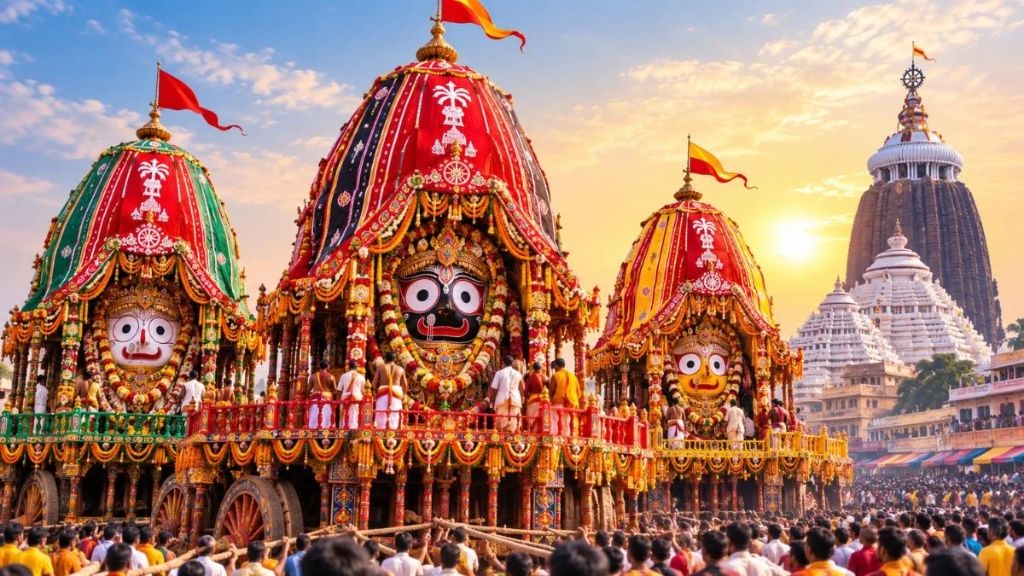
The Jagannath Rath Yatra is one of the oldest and largest religious celebrations in India. In the year 2026, this grand chariot festival commenced on July 16. On this occasion, Lord Jagannath, Lord Balabhadra, and Goddess Subhadra ride on three distinct wooden chariots from the main Puri Jagannath Temple to the Gundicha Temple. This festival is highly significant from cultural, historical, religious, and tourism standpoints, making it an essential topic for UPSC, MPPSC, and other competitive examinations.
Lord Jagannath & the Nabakalebara Tradition
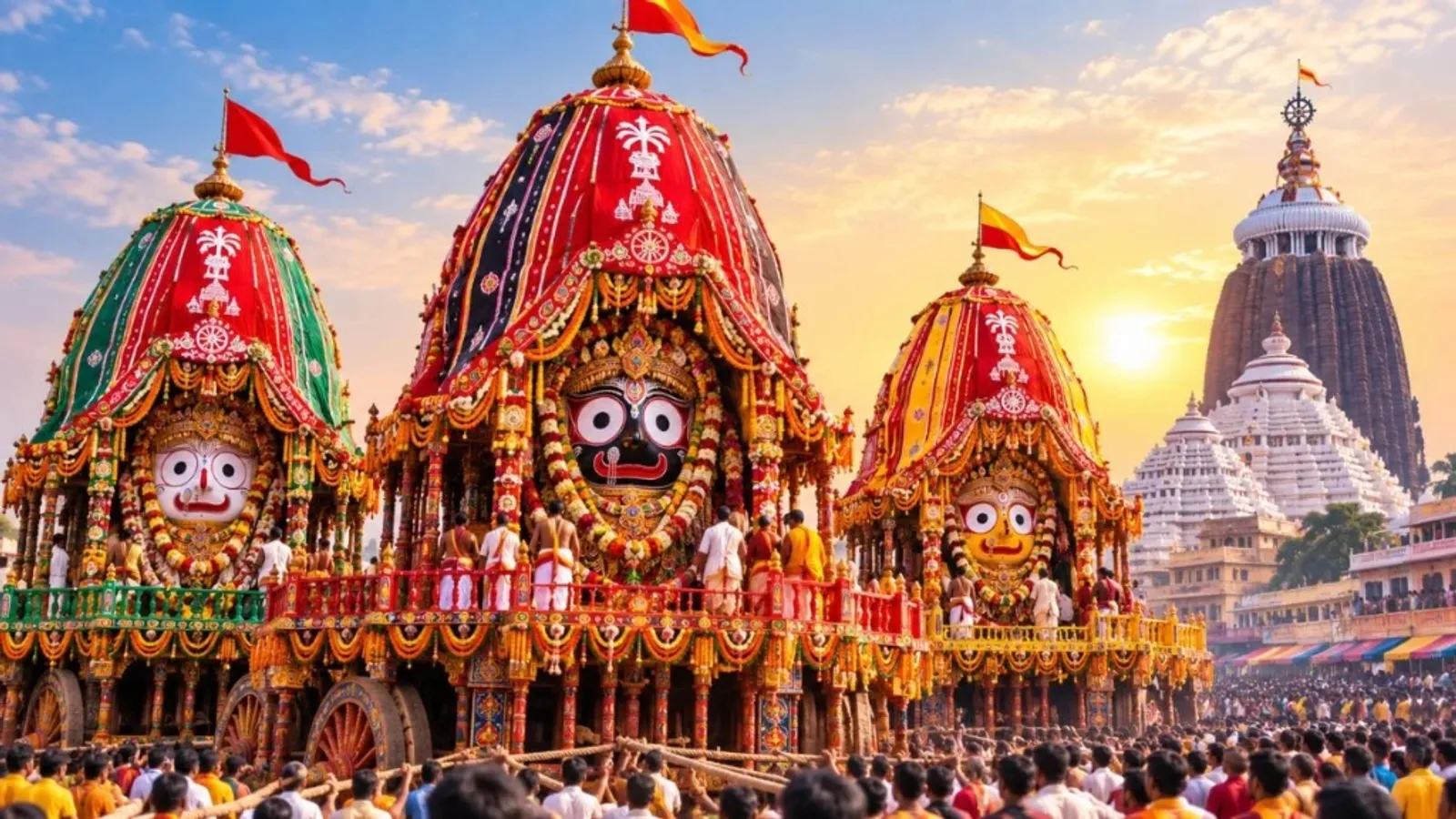
- Who is Lord Jagannath: The word 'Jagannath' means the 'Lord of the Universe'. The main temple at Puri houses three major deities—Lord Jagannath (representing Sri Krishna), Lord Balabhadra (his elder brother), and Goddess Subhadra (his younger sister). Uniquely, the idols of these deities are carved out of wood (specifically, neem wood) rather than metal or stone.
- Nabakalebara Tradition: This is the most famous and unique ritual of the temple. The term literally translates to 'acquiring a new body'. Whenever a double month of Ashadha (Adhikamasa) occurs (usually every 12 to 19 years), the old wooden idols are buried, and new ones are carved from specially selected sacred neem trees (Daru Brahma). This represents the transmigration of the soul.
- Purpose of the Yatra: According to religious beliefs, Lord Jagannath, along with his siblings, visits their maternal aunt's home at the Gundicha Temple during this period. Another popular philosophy is that the deities emerge from the sanctum sanctorum to meet the common public directly, offering access and salvation to all classes of society irrespective of caste or background.
The Three Chariots: Architecture and Specifications
The construction of the three giant chariots begins on the auspicious day of Akshay Tritiya. Each chariot has specific dimensions, colors, and number of wheels:
- 1. Nandighosha: The chariot of Lord Jagannath. It is the largest of the three, standing on 16 wheels. Adorned with red and yellow cloths, it symbolizes knowledge, cosmic balance, and righteousness (Dharma).
- 2. Taladhwaja: The chariot of Lord Balabhadra. It has 14 wheels and is decorated in red and green colors, symbolizing strength and agriculture.
- 3. Darpadalan (also known as Devadalan): The chariot of Goddess Subhadra. Standing on 12 wheels, it is decorated in red and black, symbolizing cosmic energy and protection.
Key Rituals and Ceremonies
The festival unfolds through a sequence of historic ceremonies:
- Snana Purnima: The deities are given a ceremonial bath with 108 pitchers of herbal-scented water on Jyeshtha Purnima.
- Anasara (Sick Period): After the grand bath, the deities are believed to catch a fever and are kept in isolation (Anasara Ghara) for 14-15 days. No public viewing is allowed.
- Chhera Pahara: The titular king of Puri, Gajapati Maharaja, sweeps the floor of the chariots with a golden broom. This powerful ritual establishes that in the eyes of the divine, the king and a commoner are equals.
- Gundicha & Bahuda Yatra: The onward journey is Gundicha Yatra, where the deities reside at Gundicha temple for a week. The return journey after nine days is called the Bahuda Yatra.
Puri vs Ahmedabad Rath Yatra: Key Differences
There are key differences between the two largest Rath Yatras of India (Puri and Ahmedabad):
- Puri Rath Yatra (Odisha): Active since the 10th-12th century (Ganga Dynasty). The chariots travel a distance of about 3 km to the Gundicha temple. The sweeping ritual is called 'Chhera Pahara' and is performed by the Gajapati Maharaja. It is the most famous and largest chariot festival globally.
- Ahmedabad Rath Yatra (Gujarat): Started in 1878 by Mahant Narsinghdas ji at the Jamalpur Jagannath temple. It covers a large circuit of about 16 km through the old city. The sweeping ritual is called 'Pahind Vidhi' and is traditionally performed by the Chief Minister of Gujarat. It is the second-largest Rath Yatra in India.
Historical Background & Religious Significance
- Historical Construction: The main structure of the current Puri temple was built in the 12th century by King Anantavarman Chodaganga Deva of the Eastern Ganga dynasty. The temple represents the zenith of Kalinga temple architecture.
- Scriptural Mentions: The chariot festival finds detailed mentions in ancient Hindu Puranas, including the Skanda Purana, Brahma Purana, and Padma Purana.
- The Char Dham: The Shree Jagannatha Temple at Puri is one of the four sacred Char Dham pilgrimage sites (Badrinath, Dwarka, Puri, and Rameswaram).
- Vedic Representation: In Vaishnava theology, Lord Jagannath represents Samaveda, Lord Balabhadra represents Rigveda, Goddess Subhadra represents Yajurveda, and the Sudarshana Chakra represents Atharvaveda.
Practice Questions
1On which date does the Jagannath Rath Yatra begin?
2What is the name of Lord Jagannath's chariot?
3What is the significance of Nabakalebara?
4Who performs the Chhera Pahara ritual?
5What is Bahuda Yatra?
6When did the Ahmedabad Rath Yatra start?
7Which king constructed the Jagannath Temple?
8Under which group of holy sites in India is the Jagannath Temple classified?
Frequently Asked Questions
Article Sources
3 sources
Article Sources
3 sources